


 By guest - July 23, 2026
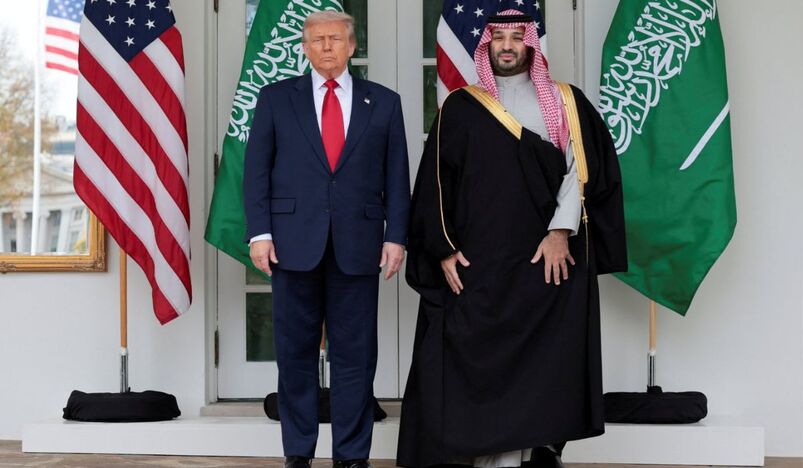
President Donald Trump has approved a landmark civilian nuclear cooperation agreement with Saudi Arabia that could eventually allow the kingdom to enrich uranium on its own soil, according to US officials, in a deal expected to be formally announced on Wednesday.
The agreement is expected to run for 30 years and give American companies a central role in developing Saudi Arabia's nuclear infrastructure. According to the Wall Street Journal, a key provision would see US firms build a uranium enrichment facility in the kingdom if a joint US-Saudi study concluded such a step was warranted.
The administration is expected to submit a formal nuclear cooperation pact — known as a “123 agreement” to Congress within days. Reuters reported the document would be signed by US Energy Secretary Chris Wright and Saudi Energy Minister Prince Abdulaziz bin Salman. Congress has a window to review such agreements.
The deal has drawn scrutiny because it leaves open the possibility of domestic Saudi enrichment without the so-called “gold standard” a commitment to forgo enriching uranium and reprocessing spent fuel that nonproliferation experts regard as the benchmark. US officials said Washington and Riyadh had agreed safeguards to inhibit any move toward weaponization, but that this framework would be overseen by the two countries themselves rather than the International Atomic Energy Agency (IAEA), which traditionally monitors such pacts.
Enrichment does not by itself produce a nuclear weapon, but it can open a pathway to one the same concern the United States and its allies have raised over Iran's program. The move also marks a departure from the approach taken by the neighbouring United Arab Emirates, which signed a 123 agreement to build its Barakah nuclear plant without seeking enrichment, a model long held up as the gold standard.
The agreement comes as Saudi Arabia deepens its strategic hedging. Last year, the kingdom signed a mutual defence pact with nuclear-armed Pakistan, whose defence minister said Islamabad's nuclear capabilities would be made available to Riyadh if needed remarks widely read as a signal to Israel, long assumed to be the region's only nuclear-armed state.
Washington has pursued a Saudi civilian nuclear deal for years. Under President Joe Biden it was floated as part of a broader effort to normalise relations between Saudi Arabia and Israel, which stalled after the October 2023 Hamas attacks; the Trump administration revived the nuclear talks last year.
Some lawmakers have signalled they will resist. Representative Brad Sherman has said he would seek to require affirmative congressional approval and gold-standard safeguards, warning against lowering the bar on nonproliferation. Secretary of State Marco Rubio, asked about the agreement on Wednesday, has said the United States is willing to partner with countries pursuing peaceful civil nuclear programs that are not geared toward weapons.
The deal had not been formally announced at the time of writing, and some details remained subject to confirmation.
.jpg)
.jpg)

_20-08-2026_05-08.jpg)
_27-51-2026_11-51.png)
_27-43-2026_12-43.png)



.jpg)
.jpg)


.jpg)


.jpg)
.png)
.jpg)












Leave a comment