


 By Hannah Grace - February 12, 2026
.jpg)
Qatar is situated in one of the world’s driest desert regions, a peninsula with a long shoreline along the Persian Gulf. With no rivers, lakes, or permanent freshwater bodies, the country has always faced the challenge of securing reliable access to water. Until the mid‑20th century, its only known source of freshwater was the underground aquifers found within tertiary marine limestone formations. Limited rainfall and few storms across the Arabian Peninsula meant these aquifers were poorly replenished, and by the second half of the century, over‑extraction led to depletion and rising salinity. Since the early 2000s, rapid urbanization and population growth have intensified demand, making water security one of Qatar’s most pressing concerns. In response, the nation has invested heavily in advanced infrastructure and innovation. Today, Qatar’s water supply comes from three primary sources: desalination, groundwater, and treated wastewater.
1. Groundwater: Qatar’s Natural Freshwater Source
Qatar’s only natural freshwater resources are rainfall and groundwater, making their conservation a national priority. The country relies on two main aquifers, the Rus and Umm er Rhaduma, spread across four basins: Northern, Southern, Doha, and Allat.
Groundwater has historically been vital, but it faces serious challenges:
- Over‑extraction: Withdrawals have consistently exceeded safe yield levels, leading to depletion, falling water tables, and increased salinity.
- Agricultural dependence: Around 90% of abstracted groundwater is used for farming, placing heavy pressure on reserves.
- Limited recharge: Rainfall is scarce, and recent years have been drier than long‑term averages, reducing natural replenishment.
- Artificial recharge efforts: Qatar has introduced projects to inject treated sewage effluent (TSE), distilled water, and irrigation return flows into aquifers to slow depletion. These artificial methods now account for the majority of recharge, while rainfall contributes only a small share.
Despite these measures, groundwater remains under stress, with persistent deficits between annual withdrawals and recharge. Protecting its quality and quantity is a central goal of Qatar’s National Development Strategy(NDS), which emphasizes sustainable use and innovative recharge techniques.
2. Desalination: Qatar’s Water Lifeline
With no rivers or lakes, desalination has become Qatar’s main source of drinking water. Today, it provides nearly all municipal needs, supplying more than 40% of the country’s total freshwater demand.
- Major plants: Umm Al Houl, Ras Abu Fontas, and Ras Laffan are among the largest, producing hundreds of millions of liters daily.
- Technology shift: Qatar is moving from traditional thermal methods to reverse osmosis (RO), which uses less energy and produces cleaner water. Reverse Osmosis (RO) now contributes almost half of Qatar’s potable supply.
- Innovation: Research centers like Qatar Environment and Energy Research Institute (QEERI) are testing new systems and exploring renewable‑powered desalination to cut carbon emissions.
- Challenge: Desalination is energy‑intensive and creates brine waste, but Qatar is investing in smarter, greener solutions to make it sustainable.
3. Treated Wastewater
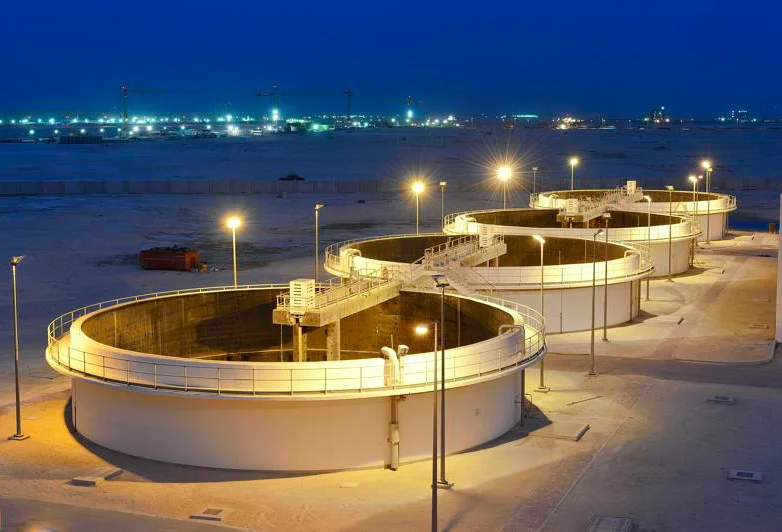
Since 2004, treated wastewater has become Qatar’s third major water source. By 2019, nearly all collected wastewater was treated, turning what was once waste into a valuable resource.
Uses: TSE(treated sewage effluent) is reused in agriculture, landscaping, parks, and even for industrial cooling.
Industrial role: Cooling industries alone consume about 17% of treated wastewater.
Aquifer recharge: Some treated water is injected back into aquifers to help slow depletion.
Strategy: National development plans emphasize expanding reuse, especially in industrial zones, to improve efficiency and sustainability.
Treated wastewater may not be used for drinking, but it plays a vital role in easing pressure on desalination and groundwater, making Qatar’s water system more resilient.
Mega Reservoirs: Record‑Breaking Water Security

To meet rising demand and prepare for emergencies, Qatar launched the Mega Reservoirs Project in 2014. The first phase, completed in 2015, built 24 giant concrete reservoirs designed to store seven days' worth of drinking water for Doha.
Scale: Linked by 500 km of pipelines and automated pumping stations, the reservoirs form one of the world’s largest water storage systems.
Record-breaking: In 2020, the project entered the Guinness World Records for the largest drinking water tank, holding over 436,000 m³.
Future-proofing: Phase two will expand capacity to cover seven days of demand projected for 2036.
Reliability: Fully automated, interconnected stations ensure a continuous supply that meets WHO standards.
This project is a cornerstone of Qatar’s water security strategy, adding resilience to desalination and wastewater reuse by guaranteeing backup storage in case of droughts or disruptions.
Challenges & Future Outlook
Qatar’s water journey shows remarkable progress, but challenges remain:
- High consumption: At over 450 liters per person per day, Qatar has one of the highest domestic water use rates globally.
- Groundwater stress: Aquifers are still over‑extracted, mainly for agriculture, leading to depletion and salinity.
- Desalination impacts: Plants are costly, energy‑intensive, and produce brine waste that affects marine ecosystems.
The way forward -
- Expanding renewable‑powered desalination and hybrid technologies.
- Scaling up treated wastewater reuse for agriculture and industry.
- Embedding net‑zero design in future projects, such as using solar panels on reservoir roofs.
- Promoting conservation through campaigns like Tarsheed, encouraging sustainable habits.
Qatar has gone from storing just 48 hours of emergency water in 2010 to being one of the region’s most water‑resilient nations today. With innovation, sustainability, and culture change, it aims to secure water for generations to come.



_20-08-2026_05-08.jpg)
_27-51-2026_11-51.png)
_27-43-2026_12-43.png)



.jpg)
.jpg)




.jpg)


.jpg)
.png)
.jpg)












Leave a comment