


 By guest - July 22, 2026
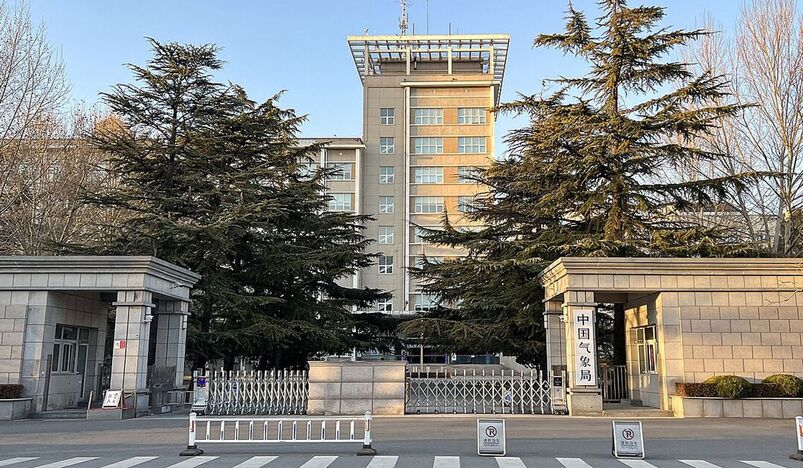
China has launched an artificial-intelligence model for weather services and opened it up to developers worldwide, in a bid to strengthen forecasting and disaster early warning both at home and abroad.
The China Meteorological Administration (CMA) unveiled the model, named Fenghe, at a meteorology forum during the 2026 World Artificial Intelligence Conference (WAIC) in Shanghai, launching what it described as a global open-source initiative.
Fenghe is a large language model-based meteorological service system, trained on 50 million tokens of meteorological service data and integrated with authoritative weather datasets to support weather forecasting, risk assessment and meteorological services. According to the CMA, it can deliver personalised weather information, service recommendations and risk alerts to users.
The system runs on a dual architecture, with the Fenghe base model handling intelligent task scheduling and an accompanying service agent platform giving developers tools for data access, tool invocation and application development. It offers interfaces spanning more than 60 specialised meteorological services across eight major categories.
An international version of Fenghe has been incorporated into the United Nations' “Early Warnings for All” initiative, offering weather consultation and risk-analysis services in Chinese and English. The open-source plan aims to enable developers, research institutions and international partners worldwide to integrate the model into their own applications and to build a shared, open AI ecosystem for meteorological services.
The launch is part of a wider Chinese effort to apply AI to weather and disaster prevention. At the same conference, the CMA also expanded its cloud-based MAZU early-warning platform — now used by more than 40 national meteorological agencies releasing a satellite AI toolbox and establishing a bilateral AI forecasting laboratory with Thailand, billed as the world's first of its kind.
The moves come as climate change drives more frequent and intense extreme weather, prompting governments to turn to AI to improve forecasts and early warnings for hazards such as floods, typhoons, heatwaves and droughts. China has also unveiled a meteorological disaster prevention plan for 2026-2030 that leans heavily on AI and what it describes as the world's largest integrated space-air-ground observation network.
_10-19-2026_09-19.jpg)



_20-08-2026_05-08.jpg)
_27-51-2026_11-51.png)
_27-43-2026_12-43.png)



.jpg)
.jpg)




.jpg)


.jpg)
.png)
.jpg)













Leave a comment