

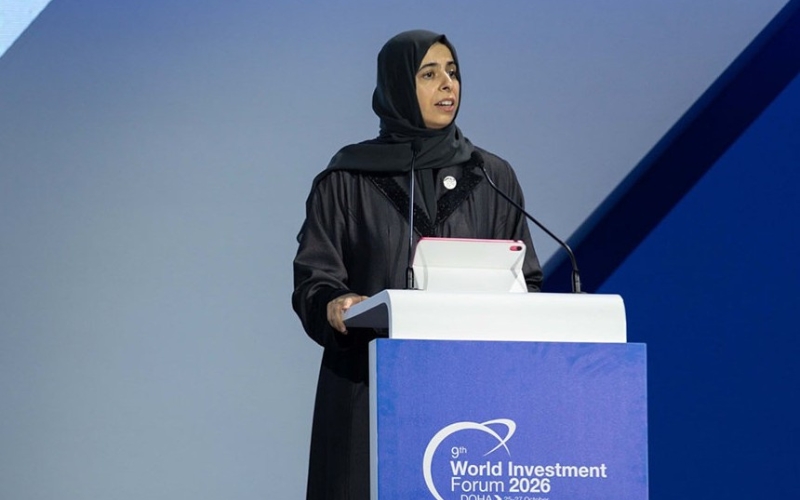
Doha, October 27, 2026 : HE Minister of Education and Higher Education Lolwah bint Rashid Al Khater has stressed that investing in education, skills development and individual capabilities is essential for sustainable development and stronger economic competitiveness.
Speaking during a session titled “Investing in Skills, Talent, and Entrepreneurship” at the World Investment Forum 2026, she highlighted the importance of public-private partnerships in widening access to education, nurturing talent and preparing people for changing labour market needs.
Al Khater said governments, businesses, academic institutions and international organisations must build lasting partnerships to achieve development goals. She added that investment in education creates value not only for learners but also for employers, investors and society.
Among the initiatives she highlighted was a QR6.4 billion public-private partnership programme to develop 20 schools. Under the arrangement, the ministry provides land and academic staff, while private-sector partners are responsible for financing, construction and operation.
She also noted that two schools under the programme are set to become the world’s largest schools constructed using 3D-printing technology.
The minister further announced that agreements signed recently with private schools and investors would provide 5,000 additional student seats, with investment and operating expenditure amounting to QR1.48 billion over 25 years.
On expanding access to education, Al Khater said social responsibility programmes have increased the number of students receiving free or reduced-tuition education, particularly those from low-income families, from around 40 a year ago to 18,000 currently.
She expressed appreciation for the private sector’s contribution to these initiatives and said the value of social responsibility partnerships is expected to exceed QR2 billion over the next decade.
Addressing technological change, particularly the growth of artificial intelligence, the minister underscored the need for continuous learning and future-skills programmes to help people adapt to evolving job requirements. She said lifelong learning and reskilling can improve workforce adaptability, productivity and the ability to benefit from emerging opportunities.
Al Khater added that inclusive access to education and stronger cooperation among governments, investors, educational institutions, international organisations and businesses are vital to addressing skills gaps, especially in AI, digital technologies and technology-enabled learning.
Concluding her remarks, she said the value of investment should be measured not only by financial returns but also by its ability to empower individuals, unlock potential and promote shared prosperity. She called for collective efforts to ensure innovation benefits all segments of society.
Source: QNA