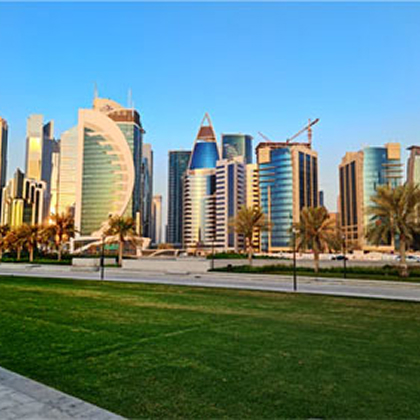


You have signed the offer letter, phoned your family, and started looking for pictures of the Doha skyline. Suddenly, the paperwork starts piling up. Moving to Qatar for a job can be exciting, but the first few weeks may involve endless forms, medical exams, and applications you have never dealt with before. A mistake could leave you without access to a bank account or a valid residence permit.
Below is a checklist for your move to Qatar, organized by when each task needs to be completed, from before your flight to your first 30 days and beyond.
The information below is valid as of October 2026. Procedures in Qatar may change, so check the latest information with your employer and the relevant government authorities.
Read Your Employment Contract
Your employment contract forms the basis for almost every aspect of your life in Qatar, from your visa to your housing. Take the time to read it carefully. Make sure you understand the difference between your basic salary and total salary, as your gratuity depends on your basic salary. Under Qatar's Labour Law, workers who have completed at least one year of service are entitled to a gratuity of at least three weeks' basic salary for each year of service.
Check whether housing, transportation, and annual flights home are provided as cash allowances or benefits. Pay attention to your probation period, which cannot exceed six months, and your annual paid leave. Workers are entitled to at least three weeks of paid leave per year, increasing to four weeks after five years of service with the same company.
It is also important to understand your legal rights. Since the new labor laws came into effect in 2020, most workers in Qatar do not need an exit permit to leave the country and can change employers without the current employer's approval, provided they follow the required notice procedure. There is also a minimum wage of QAR 1,000 per month, plus QAR 300 for food and QAR 500 for housing if these are not provided by the employer.
Get Your Documents Attested
Whatever you have heard about the document attestation process, nothing fully prepares you for it. The Qatari government requires proof that your diploma and certain personal documents are authentic. This involves obtaining a series of stamps from authorities in different countries.
For diploma attestation, you will generally need to have your diploma verified in the country where it was issued, attested by the Qatari embassy in that country, and finally attested by the Ministry of Foreign Affairs (MOFA) in Qatar. MOFA requires foreign bachelor's degrees to be submitted with their academic transcripts. Degrees obtained through online or distance-learning programs are not accepted.
Check the specific requirements for your situation, as they may vary. Prepare the following documents before departing for Qatar.
- Original diplomas and transcripts, attested according to your country's procedures.
- Birth and marriage certificates, attested in the same way if you plan to bring your family later.
- A passport valid for at least six months and passport-sized photos with a white background.
- Copies of your offer letter, employment contract, and licenses.
Understand the Work Visa and Residence Permit Process
In Qatar, you will need an employer-sponsored visa, and your employer manages the process. In several South Asian, Southeast Asian, and African countries, the process begins before you travel at a Qatar Visa Center. There, you complete biometric testing and a medical examination and sign your contract.
Once you arrive in Qatar, the countdown begins. The residence permit procedure should be completed within 30 days of your arrival. Otherwise, a fine of QAR 10,000 may be applied. During your first month, you will need to undergo a medical examination if you have not already completed one abroad, as well as fingerprinting. You can receive your Qatar ID (QID) once the required procedures are complete.
With your QID, you can open a bank account, sign up for a postpaid mobile plan, rent an apartment, and use government services. Residence permits are issued for periods of one to three years and then renewed by your employer.
If you wish to bring your family, expatriates can generally sponsor their spouses and children for family residence permits if they earn at least QAR 10,000 per month, or QAR 6,000 if their employer provides housing. These thresholds may change, so check the current requirements with your HR department.
Organize Your Digital Accounts After Arrival
Your mobile phone will likely become your main tool for staying connected in Qatar. You can buy a prepaid SIM card from Ooredoo or Vodafone Qatar at the airport or in shopping centers using your passport. Once you receive your QID, you can switch to a postpaid plan.
Next, install the necessary applications. The Metrash app from the Ministry of Interior allows you to track your residency status, pay traffic fines, renew documents, and access many other services without leaving home. The Hukoomi government portal also provides a range of services. Your bank account will be where your salary is deposited, as wages in Qatar are paid through the Wage Protection System.
When setting up government and banking applications for the first time, check whether they identify your connection as coming from another country. Some apps flag foreign connections, especially when you use your home country's SIM card or a VPN connected through your home country.
If you have trouble logging in or keep receiving additional verification requests, you can check here to see your device's IP address and location, then disable your VPN or connect to local Wi-Fi.
Organize Your Health Insurance
Law No. 22 of 2021 introduced a mandatory health insurance framework for expatriates and visitors. Your employer should cover non-Qatari employees through healthcare providers registered with the Ministry of Public Health. However, implementation is gradual, so do not assume you already have a standard plan once you receive your QID.
Ask your employer for details about your health insurance, including the provider network and whether your family members are covered. You can also obtain a Hamad health card, which provides subsidized public healthcare services at Primary Health Care Corporation clinics and Hamad Medical Corporation hospitals.
Find an Apartment for Your Commute
If your employer does not provide accommodation, housing will likely be your largest monthly expense.
- West Bay and The Pearl: Popular areas among expatriates looking for apartments near offices.
- Lusail: Known for its newly built residential complexes.
- Al Sadd and Bin Mahmoud: Central districts.
- Al Wakrah and Al Thumama: Good options for those who prefer larger apartments at lower prices.
Apartments are usually rented for one year. Landlords typically require a security deposit and may also ask for postdated checks covering the entire year, so you may need a bank account first.
Before signing the contract, clarify whether water and electricity are included in the rent. If they are not, you will need to open an account with Kahramaa, the national utilities company. Also, check whether the apartment is furnished and who is responsible for maintenance and parking.
Open Your Bank Account and Manage Your Money
Banks such as QNB, Commercial Bank, Doha Bank, and Dukhan Bank typically require your QID, passport, and a salary certificate from your employer. Some banks may open your account before you receive your QID, while others will wait. Bring some cash or a card from your home country, as you will need money during your first month.
One reason expatriates move to Qatar is that employment income is not subject to personal income tax. However, check your home country's tax regulations, as some countries, including the United States, tax their citizens on worldwide income regardless of where they live.
Adapt to the Local Culture
The working week usually runs from Sunday to Thursday, with Friday and Saturday as the weekend. Summers are hot, with temperatures exceeding 40°C from June to September, and outdoor activities may be restricted. Plan your errands for the morning or evening.
During Ramadan, eating, drinking, and smoking in public are prohibited until sunset, and working hours are shortened. Dress modestly in public places such as malls and government buildings, covering your shoulders and knees. Alcohol consumption is permitted only in licensed hotels and entertainment venues, while residents can purchase alcohol for private consumption at Qatar Distribution Company stores with a permit.
If you plan to drive, check in advance whether your nationality allows you to exchange your home country's driving license without additional training or a test.
Conclusion
Moving to Qatar for work can be rewarding if you prepare properly. Much of the stress comes from doing things in the wrong order, such as arriving with unattested documents, renting an apartment before opening a bank account, or missing the 30-day deadline for completing the residence permit procedure.
Follow the checklist in order and keep copies of all your documents, both on paper and digitally. If you have questions, contact your HR department, as they handle these procedures regularly.
Give yourself time to settle in. Once you have received your QID and become familiar with the necessary apps, life in Doha will become easier.