

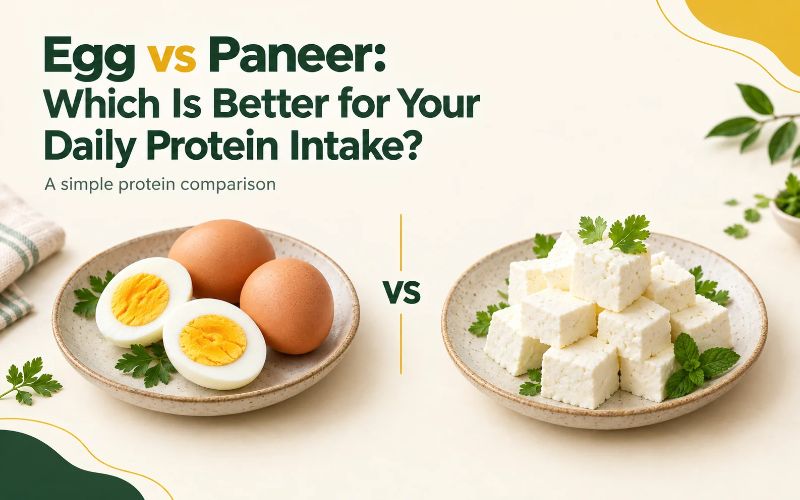
Protein is an essential nutrient that helps build and repair muscles, supports healthy bones and keeps the body functioning properly. Whether you want to improve your fitness, manage your weight or maintain a balanced diet, choosing the right protein sources can make a difference. Eggs and paneer are two popular options, but which one is better for your daily protein intake?
The answer depends on your nutritional needs, dietary preferences and overall health goals.
1. How Much Protein Do Eggs and Paneer Provide?
Both eggs and paneer provide high-quality protein, but their nutritional values differ.
Eggs: One large egg contains approximately 6–7 grams of protein.
Paneer: A 100-gram serving of paneer generally provides around 14–20 grams of protein, depending on its preparation and moisture content.
Paneer provides more protein per typical serving by weight. However, eggs are also an excellent source of protein and contain all nine essential amino acids that the body needs.
2. Nutritional Benefits of Eggs
Eggs are an affordable and versatile food that can easily fit into everyday meals. They contain protein, vitamin B12, selenium and choline, a nutrient that supports normal brain and nervous system function.
Eggs can also help you feel full for longer, making them a useful addition to a balanced breakfast. Boiled, poached or lightly scrambled eggs are convenient options for people who want to increase their protein intake without spending much time cooking.
However, the nutritional value of an egg-based meal depends on how it is prepared. Adding large amounts of butter, oil or processed meat can increase its calorie and saturated fat content.
3. Nutritional Benefits of Paneer
Paneer is a popular protein source in Indian vegetarian diets. Made from milk, it provides protein and calcium, which help maintain muscle function and bone health.
Paneer is particularly useful for vegetarians who want to increase their protein intake without relying on meat or fish. It can be added to salads, curries, wraps and sandwiches.
However, paneer can contain significant amounts of fat and calories, especially when made from full-fat milk. Choosing a lower-fat variety may be helpful for people who want to manage their calorie intake.
4. Egg vs Paneer: Which Is Better for Weight Management?
Both foods can support weight management when included in a balanced diet.
Eggs are generally lower in calories per serving, making them a convenient option for people looking for a protein-rich meal with fewer calories.
Paneer offers more protein per 100 grams in many varieties, but its calorie content can also be considerably higher. Portion size and preparation methods therefore matter.
For either option, pairing protein with vegetables, whole grains and other nutrient-rich foods can help create a balanced meal.
5. Which Is Better for Muscle Growth?
Both eggs and paneer can support muscle growth when combined with regular resistance training and sufficient overall protein intake.
Eggs provide high-quality protein, while paneer offers a convenient vegetarian option with substantial protein per serving. You do not need to rely on only one food; including both can help add variety to your diet.
Your total daily protein intake, exercise routine, sleep and overall calorie intake also influence muscle development.
6. Should You Choose Eggs or Paneer?
The better choice depends on your preferences and nutritional goals.
Choose eggs if you want an affordable, quick-to-prepare protein source. Choose paneer if you prefer vegetarian meals or want to include a dairy-based protein source that also provides calcium.
If you eat both, alternating between eggs and paneer can make your meals more varied and enjoyable.
Conclusion
Eggs and paneer are both nutritious sources of protein, and neither is automatically better for everyone. Eggs offer high-quality protein with relatively few calories per egg, while paneer often provides more protein per 100 grams and contributes calcium to the diet.
For the best results, focus on meeting your daily protein needs through a balanced diet that includes a variety of protein-rich foods. Your dietary preferences, portion sizes and health goals should guide your choice.