


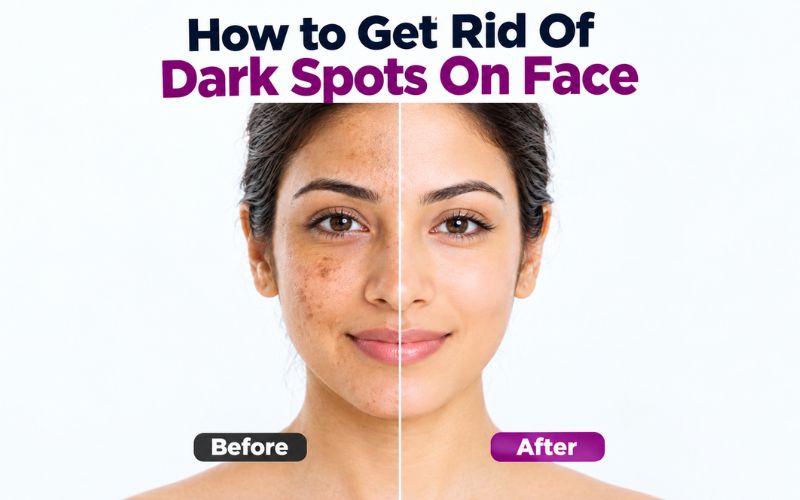
Dark spots and facial pigmentation can develop due to excessive sun exposure, hormonal changes, inflammation, and acne. Although these spots are usually harmless, they can affect the skin’s appearance and make the complexion look uneven. They commonly appear on the cheeks, forehead, and upper lip.
Understanding the underlying causes is the first step towards reducing pigmentation. Sun exposure and acne are common triggers, while harsh skincare products and repeated friction can also contribute to dark spots. With a consistent skincare routine, proper sun protection, and suitable treatments, pigmentation may gradually become less noticeable over time.
Make Sunscreen a Part of Your Daily Routine
But if there is any skincare habit to maintain day in and out, it should be sunscreen. Sunlight both aggravates preexisting dark spots and causes new ones. Apply a broad spectrum sunscreen SPF 30 or above in the morning as an extra precaution to keep your skin safe and from darkening the pigmentation further.
You Should Still Wear Sunscreen On Overcast Days Apply outdoors and reapply approximately every 2 hours, and after swimming or sweating. Despite how wonderful your skin care regimen may be, if you do not safeguard against the sunlight, it is of little help.
Select only the best ingredients for your skin
An ideal skin care process normally eliminates dark spots. Ask your dermatologist to help you select a serum, preferably with brightening agents and fewer allergens. Some of the best ingredients are Vitamin C, niacinamide and azelaic acid. Another great option is retinoids.
Do not get confused by analysing the cause of pigmentation. Start with simple things, when you try to get rid of it. Cleansing skin helps to remove dirt and additional oil that has built up on the pores, using a gentle cleanser. Then, feed that with a suitable moisturizer based on your skin type.
The main thing is to refrain from rubbing the skin with any domestic mixtures and it is required to visit a dermatologist who will treat the underlying disease.
Professional Treatment, if Necessary
Others may be hard to treat at home, and in such case a dermatologist can prescribe some exercises for the removal of these dark spots. The doctor may also prescribe creams to be used once the skin is healed.
The best and most reliable answer is to go see a dermatologist who will tell you the interventions / creams that suit your skin type and condition.
How much time does dark spots take to fade?
Spots usually don't vanish overnight; this means that a strong resistance needs to be prepared for a marathon. It can take months before the marks almost completely disappear.
A pack of multiple random skin care products does not help getting rid of dark spots. Daily routine should have the use of sunscreen lotions, tidal skin cleaning and some cosmetics. If this does not help, a dermatologist should be consulted. Because real dedication time and skin care can supply a person with healthier skin.
Conclusion
Some lesions fade away on their own and some need professional services. If these dark spots continue to appear or increase, a visit to a skin specialist will assist you discover what the cause is and why it is occurring and treat it on your skin accordingly.