


 By Mohammed - September 05, 2026

Pigmentation on the face is one of the most common skin concerns people search for a permanent fix to. Dark spots, patches, and an uneven skin tone can appear at almost any age, and they rarely disappear on their own. The good news is that with the right combination of ingredients, a consistent skincare routine, and, when needed, professional treatment, pigmentation can be significantly reduced and often kept from coming back.
This guide explains what causes facial pigmentation, which ingredients and remedies actually help fade it, and when it makes sense to see a dermatologist for a more permanent solution.
What Is Skin Pigmentation?
Skin pigmentation refers to the color of the skin, which is determined by a pigment called melanin. Specialized cells called melanocytes produce melanin, and when they become overactive in certain areas, the skin develops darker spots or patches. This condition is known as hyperpigmentation.
Hyperpigmentation is not a disease. It is a cosmetic concern that affects confidence more than physical health, though in some cases it points to an underlying hormonal or medical issue worth discussing with a doctor. Understanding the type and cause of pigmentation is the first step toward an effective, targeted treatment. Identifying the correct type and concern leads to far more predictable results, whether the plan relies on over the counter products or professional treatment.
Common Types of Facial Pigmentation
Not all dark spots are the same. Identifying the type of pigmentation helps in picking the right products and treatments.
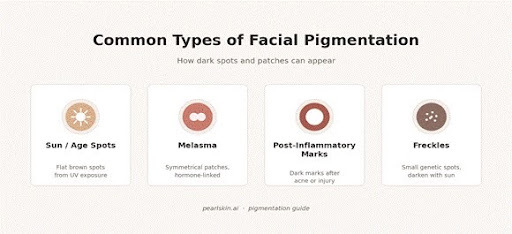
Sun Spots and Age Spots
Also called liver spots or solar lentigines, these flat brown spots form on areas with the most sun exposure, such as the cheeks, forehead, and nose. They become more common with aging and years of UV exposure.
Melasma
Melasma appears as larger, symmetrical brown or gray-brown patches, usually across the cheeks, forehead, and upper lip. It is strongly linked to hormonal changes, including pregnancy and birth control pills, and tends to worsen with sun exposure.
Post-Inflammatory Hyperpigmentation
This is known as post inflammatory hyperpigmentation, and it develops after an injury to the skin, such as acne, burns, or cuts. Oily acne-prone skin is especially prone to this type, since breakouts leave dark marks and acne scars behind as they heal. A soothing gel or spot treatment can calm the area while it fades.
Freckles
Freckles are small, flat, light-to-dark brown spots that are largely determined by genetics. They tend to darken with sun exposure and fade somewhat in winter.
What Causes Pigmentation on the Face?
Pigmentation rarely has a single cause. Multiple factors often combine to trigger excess melanin production.
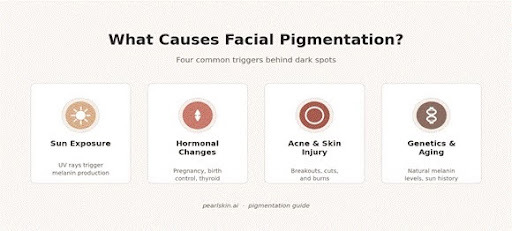
Sun Exposure and UV Damage
UV rays are the most significant trigger of facial pigmentation. Sun exposure stimulates melanocytes to produce more melanin as a protective response, which is why spots often appear or darken after time outdoors without sunscreen.
Hormonal Changes
Hormonal changes, including pregnancy, birth control pills, and thyroid conditions, can trigger melasma and other forms of pigmentation. This is why melasma is sometimes called the "mask of pregnancy."
Acne and Skin Injury
Acne, burns, cuts, and even aggressive scrubbing can injure the skin and trigger a healing response that leaves dark marks. Picking at pimples significantly increases the risk of lasting post-inflammatory hyperpigmentation and scars.
Genetics, Aging, and Other Factors
Genetics influence how much melanin the skin naturally produces and how it reacts to sun exposure. Aging, medications, nutrient deficiencies, and chronic skin conditions can also contribute. Low vitamin B12 or folic acid levels have also been linked to patches of hyperpigmentation, though sun exposure and hormonal changes remain far more common triggers.
Can Pigmentation Be Removed Permanently?
Many people ask whether pigmentation can be removed permanently, and the honest answer is nuanced. Existing dark spots can often be significantly faded or removed with consistent treatment, especially with professional options such as chemical peels or laser therapy. However, new pigmentation can form again if the underlying cause, such as sun exposure or hormonal changes, is not managed.
In practical terms, "permanent" removal usually means combining an effective treatment to fade current spots with daily prevention, particularly sunscreen, to stop new pigmentation from developing. Skin that is not protected from UV rays will likely develop new dark spots even after successful treatment.
For aesthetic clinics in Dubai, clear treatment education and a strong local online presence help patients make informed decisions before booking. Odyssey Marketing LLC supports UAE healthcare and beauty businesses with Local SEO, content strategy, and lead-generation solutions.
Skincare Ingredients That Help Fade Pigmentation
Several science-backed ingredients are known to reduce melanin production, exfoliate pigmented cells, or calm the inflammation that leads to dark marks. Combining two or three of these in a simple routine is often more effective than switching products constantly. Ingredients like vitamin C, niacinamide, and azelaic acid are backed by dermatological research, and over the counter formulas containing these actives are widely available. These ingredients suit most skin types when introduced gradually, and consistent use reduces melanin buildup in the outer skin layers. Vitamin E is sometimes paired with vitamin C for extra antioxidant protection. Oily skin often shows pigmentation more visibly, so lightweight, non-comedogenic formulas work best.
|
Ingredient |
How It Works |
Best For |
|
Vitamin C |
A potent antioxidant that inhibits melanin production and brightens overall complexion |
Dullness, uneven skin tone, early sun damage |
|
Niacinamide (Vitamin B3) |
Reduces the transfer of melanin to skin cells and calms redness |
Sensitive, acne-prone, and oily skin |
|
Kojic acid |
Derived from fungi, it inhibits the enzyme responsible for melanin production |
Stubborn dark spots and melasma |
|
Azelaic acid |
Gently exfoliates and reduces pigment-producing activity, with anti-inflammatory effects |
Acne-prone skin with post-inflammatory marks |
|
Glycolic / lactic acid |
Alpha-hydroxy acids that speed up cell turnover, fading pigmented skin cells |
Uneven texture, surface-level dark spots |
|
Retinol |
Accelerates cell turnover and gradually fades dark spots over months |
General aging and pigmentation concerns |
New actives should be introduced gradually and paired with sunscreen, since exfoliating acids and retinol increase sun sensitivity. Applying a vitamin C serum each morning helps support skin health and brightens a dull complexion. Niacinamide helps with calming redness while fading dark spots, and oily combination skin benefits from a lightweight gel moisturizer under sunscreen. For acne prone skin, non-comedogenic, oil-free formulas prevent new breakouts while treatment continues.
Natural Home Remedies for Pigmentation
Alongside targeted skincare ingredients, several natural remedies are popular for lightening mild pigmentation:
● Aloe vera gel contains a compound called aloesin, which can inhibit melanin formation in pigmented areas when applied consistently.
● Licorice extract contains glabridin, which may help lighten hyperpigmentation caused by melasma and sun exposure.
● Green tea extract has shown some depigmenting effect in research and can be applied directly to dark spots.
● Turmeric is used in many traditional remedies for its anti-inflammatory properties, though results vary and a patch test is recommended.
Natural remedies generally work more slowly than clinical ingredients and are best suited to mild, surface-level pigmentation. Always do a patch test first, especially on sensitive skin, since some natural ingredients can cause irritation. Most natural remedies take several weeks to show visible improvement, and patch testing helps avoid irritation on oily acne prone skin. Aloe vera gel is also available in most pharmacies. A turmeric or aloe vera gel mask can be used two to three times a week for mild brightening; for best results, pair it with daily sunscreen.
Daily Skincare Routine to Prevent and Fade Pigmentation
A simple, consistent routine matters more than any single product. A practical daily approach includes:
1. Cleanse gently, twice a day, to remove excess oil and impurities without stripping the skin barrier.
2. Treat with a targeted serum containing vitamin C, niacinamide, or another pigmentation-fading ingredient; over the counter options are widely available and typically show visible results within 4 to 8 weeks.
3. Moisturize to support the skin barrier, especially while using exfoliating acids or retinol.
4. Protect with a broad spectrum sunscreen, SPF 30 or higher, applied every morning without exception. Very oily skin may prefer a gel-based sunscreen, and oily skin types should avoid heavy, comedogenic formulas that trigger new breakouts.
Most ingredients take weeks to months to show visible improvement, so patience and daily application matter more than product strength. Treatment serums are widely available at most pharmacies.
.jpeg)
Professional Pigmentation Treatments
When home care and over-the-counter products are not enough, especially for melasma or deep-set pigmentation, professional treatments can deliver faster and more lasting results. Options a dermatologist may recommend include:
● Chemical peels, using glycolic, salicylic, or other acids to exfoliate the pigmented outer layers of skin, typically over several sessions
● Laser toning, which targets melanin deposits directly and is often used for stubborn or deep pigmentation
● Microdermabrasion, which is effective for more superficial pigmentation and improves overall texture
● Microneedling, which stimulates collagen while helping treatments penetrate more effectively
These treatments often need multiple sessions spaced several weeks apart, with visible results building gradually. Skin and sun exposure vary from person to person, so a personalized plan matters — not all treatment types suit every kind of pigmentation. Professional treatments are also available at most dermatology clinics, including options for darker or more sensitive skin types.
How to Prevent New Pigmentation From Forming
Preventing new spots is just as important as fading existing ones:
● Apply broad-spectrum sunscreen daily, even indoors or on cloudy days
● Wear protective clothing, wide-brimmed hats, and sunglasses during peak sun hours
● Avoid picking at acne or scabs to reduce the risk of post-inflammatory hyperpigmentation
● Reapply sunscreen every two hours when spending extended time outdoors
● Manage underlying hormonal changes with a doctor's guidance when relevant
Pigmentation vs. Other Skin Conditions
Pigmentation is sometimes confused with other conditions. Vitiligo causes patches of skin to lose pigment entirely rather than darken. Eczema causes dry, itchy, inflamed patches rather than flat discoloration. Rosacea produces persistent redness rather than brown or gray marks. A dermatologist can confirm the correct diagnosis, since each condition requires a different treatment approach.
Dermatologist's Note: Dermatologists often stress that consistency and sun protection matter more than any single miracle ingredient. Fading existing pigmentation while skipping daily sunscreen is like emptying a bathtub with the tap still running. Combining a targeted skincare routine with professional treatment, when needed, offers the most realistic path to clearer, more even-toned skin.
Frequently Asked Questions About Removing Pigmentation
How long does it take to remove pigmentation from the face?
Most skincare ingredients take several weeks to a few months of consistent use to show visible results, while professional treatments such as chemical peels or laser toning may need multiple sessions over a similar timeframe.
Can pigmentation come back after treatment?
Yes. Pigmentation can return if the underlying cause, such as sun exposure or hormonal changes, is not managed, which is why daily sunscreen and a consistent routine are essential even after visible improvement.
Is pigmentation the same as melasma?
No. Melasma is one specific type of pigmentation, typically triggered by hormonal changes, while pigmentation is a broader term that also includes sun spots, freckles, and post-inflammatory marks.
What is the fastest way to reduce pigmentation?
Professional treatments like laser toning and chemical peels generally work faster than home remedies, though they still require multiple sessions and consistent aftercare to maintain results.
When should I see a dermatologist about pigmentation?
See a dermatologist if pigmentation is spreading, darkening, not improving with consistent at-home care, or if you are unsure what type of pigmentation you have.
Do vitamin deficiencies cause pigmentation?
Low levels of certain vitamins, such as B12, have been linked to patches of hyperpigmentation in some studies, though acne, sun exposure, and hormonal changes remain the more common causes. Supplements are available if diet alone falls short, but a doctor should confirm any deficiency first.
Stubborn or deep-set dark spots often respond better to in-clinic care than to home remedies alone. Booking a professional pigmentation treatment in Dubai connects you with a dermatologist who can combine targeted procedures with a home routine for longer-lasting results.




_20-08-2026_05-08.jpg)
_27-51-2026_11-51.png)
_27-43-2026_12-43.png)



.jpg)
.jpg)




.jpg)


.jpg)
.png)
.jpg)













Leave a comment