


 By guest - August 02, 2026
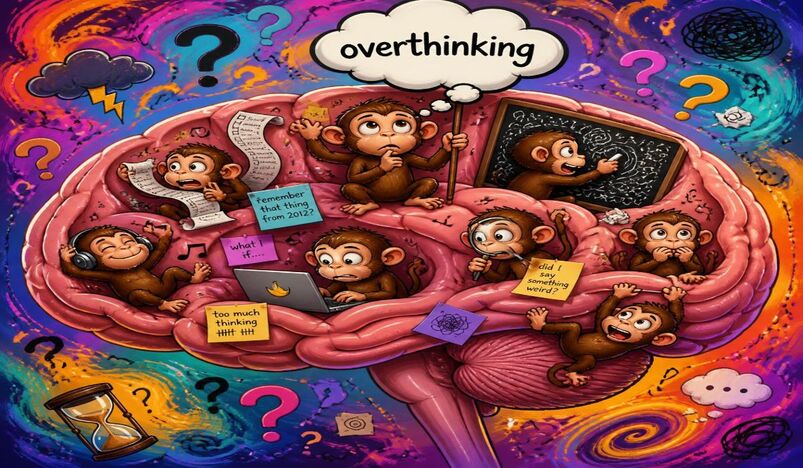
The term "monkey brain" is an informal expression, not a medical diagnosis. It is commonly used to describe a state where the brain defaults to instinctive, impulsive, or emotionally driven thinking instead of calm, rational decision-making.
People often use "monkey brain" to describe experiences such as:
• Overthinking: Your mind jumps rapidly from one thought to another.
• Restlessness: You find it difficult to stay focused or sit still.
• Anxiety: Your brain constantly imagines worst-case scenarios.
• Impulsiveness: You react emotionally before thinking things through.
• Mental chatter: Your inner voice keeps running nonstop, making it hard to relax.
The phrase is related to the concept of the "monkey mind," which comes from Buddhist traditions. It compares the human mind to a monkey swinging from branch to branch—constantly distracted, curious, and unable to settle.
Why does it happen?
Several factors can contribute to a "monkey brain," including:
• Stress and anxiety
• Lack of sleep
• Information overload
• Excessive social media use
• Too much caffeine
• High-pressure environments
How can you calm a "monkey brain"?
• Practice mindfulness or meditation.
• Get 7–9 hours of quality sleep.
• Exercise regularly.
• Limit screen time and social media.
• Focus on one task at a time instead of multitasking.
• Try deep breathing or relaxation techniques.
Is it a medical condition?
No. "Monkey brain" is not an official medical or psychological diagnosis. However, if racing thoughts, restlessness, or anxiety are frequent, severe, or interfere with daily life, they may be associated with conditions such as anxiety disorders, ADHD, or chronic stress. In those cases, consulting a healthcare professional is advisable.
In short, "monkey brain" is a popular way to describe a busy, distracted, or overactive mind that constantly jumps from one thought to another.
_02-48-2026_05-48.png)

_28-04-2026_08-04.jpg)

_26-41-2026_01-41.jpg)

_20-08-2026_05-08.jpg)
_27-51-2026_11-51.png)
_27-43-2026_12-43.png)



.jpg)
.jpg)



.jpg)


.jpg)
.png)
.jpg)













Leave a comment