


 By Roysten Xavier - July 05, 2026
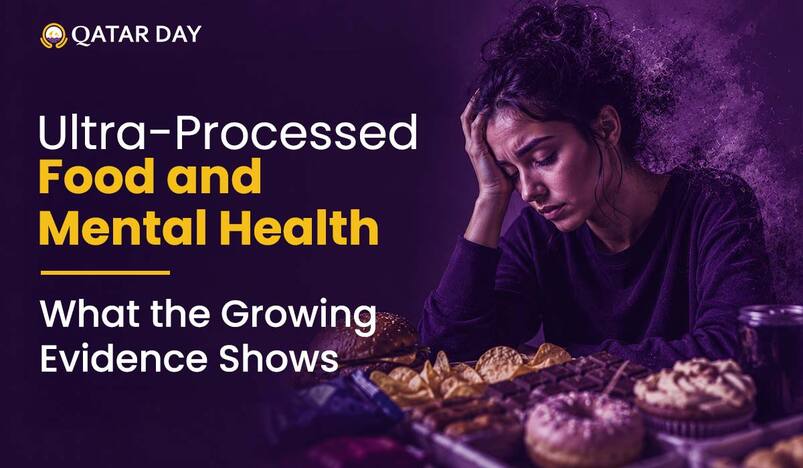
For years, the conversation about ultra-processed food centered almost entirely on waistlines and cardiometabolic disease. Increasingly, though, researchers are asking a different question: what is this food doing to our minds? A fast-growing body of observational research much of it published just in the last year suggests a consistent link between high ultra-processed food (UPF) intake and worse outcomes for depression, anxiety, and related mental health conditions. The evidence isn't proof of cause and effect, but it's too large and too consistent to dismiss.
What counts as "ultra-processed"?
Ultra-processed foods are industrially formulated products sodas, packaged snacks, sweetened cereals, reconstituted meats, most fast food typically made with ingredients you wouldn't find in a home kitchen: preservatives, emulsifiers, artificial flavors, and concentrated sugars, fats, and starches. They're classified under the NOVA food classification system, which sorts foods by degree of processing rather than by nutrient content alone, and they now make up a majority of caloric intake in many high-income countries.
What the research shows
The scale of recent research is notable. A large meta-analysis pooling observational data found that people with the highest UPF consumption had meaningfully higher odds of depressive and anxiety symptoms combined, and higher odds for each condition individually when looked at separately. A separate analysis of prospective studies which track people over time rather than measuring everyone at a single moment found that higher UPF intake was associated with a moderately increased risk of later developing depression, which matters because it suggests the food came first and the symptoms followed, not the other way around.
Some individual studies illustrate the pattern in more granular terms. One dose-response analysis found that for every 10% increase in the share of daily calories coming from ultra-processed sources, the risk of depression rose by roughly 11%. The long-running Nurses' Health Study II, which followed tens of thousands of women for over a decade, found that women in the highest tier of UPF consumption had a meaningfully elevated risk of depression compared with those who ate the least.
The pattern also holds outside adult populations. A recent systematic review focused specifically on children and adolescents found that most included studies pointed toward higher UPF consumption being associated with more anxiety, depression, irritability, and cognitive difficulties in young people. Several newer cross-sectional studies in adolescent and young-adult populations including recent research out of Iran examining both adolescent girls and university students found similar associations, though a few individual studies found that the relationship weakened or lost statistical significance once researchers controlled for other factors like body weight, physical activity, or income.
Possible mechanisms
Researchers have proposed several biological pathways that could explain the link, though none has been proven as the dominant driver:
- The gut-brain axis. UPFs tend to be low in fiber and high in additives that may disrupt the gut microbiome, which communicates with the brain via the vagus nerve and through microbial byproducts that influence mood-related neurotransmitters.
- Inflammation and oxidative stress. Diets high in refined sugar, industrial seed oils, and additives have been linked to low-grade systemic inflammation, a process increasingly implicated in depression.
- Nutrient displacement. Heavy reliance on UPFs often crowds out whole foods rich in nutrients tied to brain health, such as omega-3 fatty acids, B vitamins, and antioxidants a mechanism supported by separate evidence that Mediterranean-style, whole-food-rich diets are associated with lower depression rates.
- Blood sugar volatility. Many UPFs cause rapid spikes and crashes in blood glucose, which some researchers believe may contribute to mood instability and fatigue.
What the evidence doesn't yet show
It's important to be precise about what this research can and can't say:
- Most of the underlying evidence is observational, meaning it shows association, not proof of causation. People who eat more ultra-processed food may also differ in other ways income, sleep, physical activity, baseline stress that independently affect mental health.
- Reverse causation is a real possibility. People experiencing depression or anxiety may turn to convenient, highly palatable processed foods as a coping response, meaning poor mental health could partly be driving the dietary pattern rather than the other way around.
- Effect sizes vary substantially by study, and some rigorously adjusted analyses have found the association weakens or disappears once other lifestyle factors are accounted for.
- True experimental (randomized, causal) evidence in humans is still sparse. Much of what's needed next is controlled feeding trials that can more directly test whether changing UPF intake changes mental health outcomes, rather than relying on self-reported diet and mood.
The bottom line
The evidence connecting ultra-processed food to poorer mental health has become too consistent across large studies and different populations to treat as a fringe theory multiple large meta-analyses now show real, if moderate, associations with depression and anxiety, and at least one line of evidence suggests the food intake may precede symptom onset rather than simply following it. At the same time, researchers are careful to note that correlation isn't destiny, and messaging around this topic should avoid tipping into diet-shaming, since UPF-heavy diets are often shaped by cost, access, and time constraints rather than pure personal choice. For now, the most defensible takeaway is a familiar one: shifting toward more whole, minimally processed foods appears to support better mental health on average but for any one individual, diet is one piece of a much larger picture that includes sleep, movement, social connection, and clinical care when needed.



_20-08-2026_05-08.jpg)
_27-51-2026_11-51.png)
_27-43-2026_12-43.png)



.jpg)
.jpg)




.jpg)


.jpg)
.png)
.jpg)













Leave a comment