


 By Guest - August 03, 2026
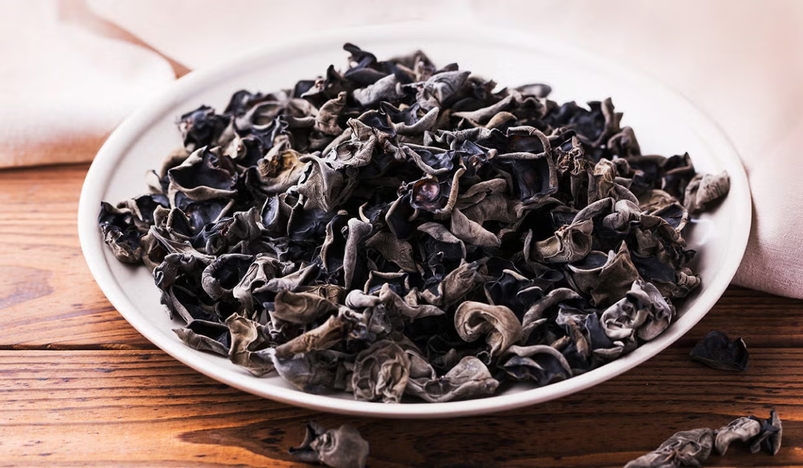
“Black mushroom” is less one specific thing than a loose label for a handful of dark-hued edible fungi. In most kitchens — and especially in Chinese, Southeast Asian and Indian-Chinese cooking — it points to one of two ingredients: black fungus (wood ear), a jelly-like fungus that grows on trees, or dried shiitake, which Chinese cooks often call “black mushrooms.” Both are pantry staples, valued as much for what they do to a dish's texture and depth as for their nutrition.
So what exactly is it?
Black fungus — also known as wood ear or cloud ear (from the Auricularia family) — is the one most often meant by “black mushroom.” It grows in ear-shaped, dark brown-to-black frills on tree trunks and fallen logs. It is usually sold dried and shrivelled, and swells to several times its size when soaked. On its own the flavour is mild, almost neutral; what people love is the springy, gently crunchy texture and its knack for soaking up whatever sauce it's cooked in.
The other common “black mushroom” is the dried shiitake (Lentinula edodes), whose dark caps develop a deep, savoury, umami-rich flavour once rehydrated. Elsewhere the same nickname is attached to different species altogether — the trumpet-shaped black trumpet mushroom, for instance, or the djondjon used to make Haiti's famous black rice.
Nutrition at a glance
Black fungus is naturally low in calories and fat while offering a useful amount of plant nutrition. It's a notable source of:
• Dietary fibre, which supports digestion and gut health;
• Iron, the reason it's traditionally eaten to help support healthy blood;
• Antioxidant plant compounds such as polyphenols;
• Minerals including potassium, calcium and magnesium, plus a little plant protein.
Why people eat it
Beyond the kitchen, black fungus has a long history in East Asian food-as-medicine traditions. It's commonly credited with supporting digestion, thanks to its fibre; with contributing iron to the diet; and with providing antioxidants. Some research has looked at compounds in wood ear that may have a mild blood-thinning effect and a modest role in supporting healthy cholesterol, though the evidence is still developing. The sensible way to view it is as a nutritious, high-fibre addition to a varied diet rather than a remedy in its own right.
How to use it
Most black fungus is sold dried. To prepare it, rinse the pieces, then soak in water until they unfurl and soften — soaking in the fridge is the safest approach — before trimming away any tough, woody centres and rinsing again. From there it's ready to stir-fry, drop into soups (it's the classic crunch in hot-and-sour soup), fold into dumpling fillings, toss through noodles, or dress as a cold salad with soy, vinegar, garlic and chilli. It should always be cooked, never eaten raw, and pairs naturally with ginger, garlic, sesame and spring onion.
An important safety note. Rehydrate dried wood ear in the refrigerator and use it promptly — soaking it for many hours at room temperature has been linked, in rare cases, to serious foodborne illness. Always cook it thoroughly, and buy from reputable suppliers rather than foraging, since wild fungi can be dangerous to identify. Because black fungus may have a mild blood-thinning effect, anyone on anticoagulant medication or approaching surgery may wish to moderate their intake and check with a doctor.
In short, “black mushroom” is a friendly catch-all — most often the springy wood ear, sometimes a deeply savoury dried shiitake. Either way, it's an inexpensive, nutritious and endlessly adaptable ingredient that has earned its place in kitchens across Asia and beyond.
This article is for general information and is not medical advice.


.png)
.png)
.jpg)

_20-08-2026_05-08.jpg)
_27-51-2026_11-51.png)
_27-43-2026_12-43.png)



.jpg)
.jpg)




.jpg)


.jpg)
.png)
.jpg)













Leave a comment