


 By Roysten Xavier - July 12, 2026
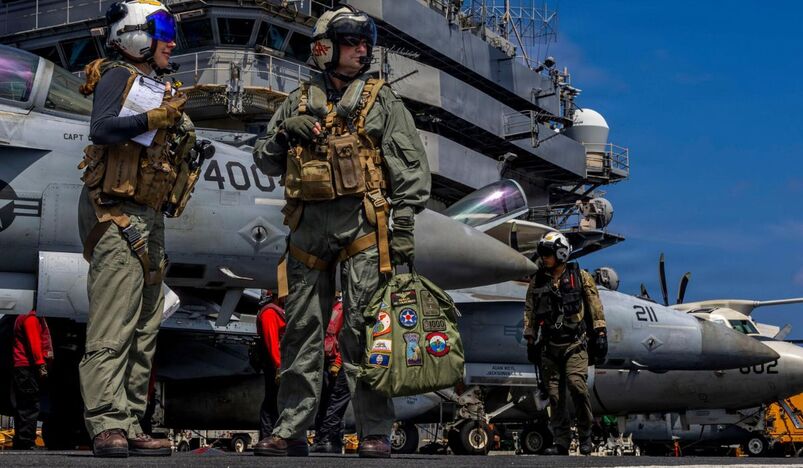
The US Central Command (CENTCOM) announced it had completed a third round of strikes against Iran on Saturday, striking approximately 140 military targets using precision munitions launched from land- and sea-based fighter jets, drones, and naval vessels.
What triggered this round: CENTCOM said the strikes began at 7:15 p.m. ET after Iran's Islamic Revolutionary Guard Corps (IRGC) attacked the M/V GFS Galaxy, a Cyprus-flagged container ship transiting the Strait of Hormuz. According to CENTCOM, the vessel suffered an onboard fire and significant engine room damage, with one civilian crew member reported missing; the rest of the crew abandoned ship into a lifeboat, according to the UK Maritime Trade Authority.
What was targeted: This round hit Iranian missile and drone storage sites, naval capabilities, ammunition depots, communications networks, and coastal surveillance installations. Across all three rounds of strikes conducted this week, CENTCOM says it has now hit more than 300 sites in total, aiming to reduce Iran's ability to threaten commercial shipping and civilian mariners transiting the strait.
Iran's response: Iran retaliated with strikes on US-linked military facilities across the region, according to Iran's Press TV — including reported drone strikes on a Patriot air defense system, an ammunition depot, and a US radar facility in Kuwait, as well as an attack on a CENTCOM command center in Jordan. Iran's IRGC also claimed a "surprise" strike on refueling platforms used by US aircraft carriers at the port of Duqm in Oman. Separately, QNA reported a drone attack on sites in Oman's Musandam Governorate and three people, including a child, injured by shrapnel from interception operations — suggesting the conflict is spilling into Gulf neighbors' territory beyond Iran and the US directly.
Official statements: US Secretary of War Pete Hegseth commented that "Iran made a poor choice" and "now they pay." Iran's military, for its part, has called on US forces to abide by the terms of a prior memorandum of understanding, accusing Washington of trying to force open an "illegal corridor" through the Strait of Hormuz.
Broader context: This escalation traces back to July 7, when two tankers — the Qatari-owned LNG carrier Al Rekayat and the Saudi-flagged supertanker Wedyan — were struck by projectiles in the strait. Qatar accused Iran of responsibility for the attack on its vessel. The current cycle of strikes and counterstrikes follows a broader deterioration dating back to failed nuclear talks in Geneva and an earlier 12-day air conflict between Iran and Israel in 2025. Despite the ongoing hostilities, CENTCOM states that more than 800 commercial vessels and 400 million barrels of crude oil have successfully transited the strait since early May under US protection efforts.



_19-42-2026_10-42.jpg)

_20-08-2026_05-08.jpg)
_27-51-2026_11-51.png)
_27-43-2026_12-43.png)



.jpg)
.jpg)



.jpg)


.jpg)
.png)
.jpg)













Leave a comment