


 By neha - July 09, 2026
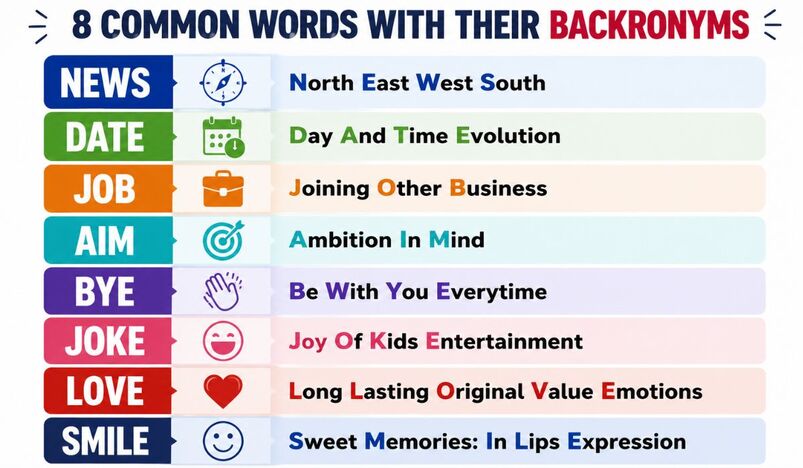
A single social media post is changing how people read common words. It breaks familiar terms into playful phrases called backronyms.
A backronym takes an existing word and builds a new phrase from its letters. Unlike acronyms, backronyms attach meaning after the word already exists. This trend has turned ordinary words into small lessons about life.
What Sparked This Trend
The viral post lists eight common words with reimagined full forms. Each phrase adds emotional or philosophical meaning to a familiar term.
The post has gathered hundreds of thousands of likes within days. Comment sections show people sharing the list with friends and family. This kind of content works because it feels personal and easy to share.
The Full List And What Each One Means
- NEWS stands for North East West South: This phrase reflects how news traditionally arrives from every direction. Early reporters gathered information from all four compass points before radio existed.
- DATE stands for Day And Time Evolution: This backronym highlights how dates track the passage of time itself. Every date marks a small evolution from the day before it.
- JOB stands for Joining Other Business: This phrase reframes work as a connection rather than just a task. A job links your effort to a larger business or goal.
- AIM stands for Ambition In Mind: This backronym captures the mental focus behind every goal. An aim exists first as a thought before it becomes an action.
- BYE stands for Be With You Everytime: This phrase turns a simple goodbye into a lasting promise. It suggests connection continues even after someone leaves the room.
- JOKE stands for Joy Of Kids Entertainment: This backronym ties humor back to childhood simplicity. Jokes remind adults of the easy joy found in play.
- LOVE stands for Long Lasting Original Value Emotions: This phrase treats love as something enduring rather than fleeting. It frames love as a genuine value rather than a passing feeling.
- SMILE stands for Sweet Memories: In Lips Expression. This backronym connects a simple facial expression to deeper memory. A smile becomes a small window into past happiness.
Why Backronyms Work So Well Online
Backronyms simplify complex feelings into short, memorable phrases. People can read and share them within seconds.
They also create an emotional hook without requiring deep explanation. A short phrase like this feels personal even to strangers scrolling quickly.
Word origin experts note that true etymology often differs from these playful versions. Real word origins usually trace back to older languages, not backronyms. NEWS, for example, comes from the Middle English word newes.
Are These Full Forms Historically Accurate
No, these full forms are not official etymology. They function as creative wordplay rather than documented linguistic history.
Genuine word origins involve centuries of language change across cultures. Backronyms instead reverse engineer meaning from a word that already exists. This distinction matters for anyone researching real linguistics.
How People Are Using This Trend
- Sharing the list as an Instagram or Facebook caption.
- Using individual phrases as journal prompts for reflection.
- Turning single words into classroom or icebreaker discussions.
- Adding phrases to greeting cards or motivational posts.
- Creating personal variations for names or other favorite words.
The Bigger Takeaway
This trend shows how creative language keeps people engaged online. A simple twist on a familiar word can spark genuine reflection.
You do not need historical accuracy to enjoy wordplay like this. Sometimes a fresh way of reading a word reveals a small truth. Everyday words like NEWS, LOVE, and SMILE carry more than we usually notice.
_20-08-2026_05-08.jpg)
_27-51-2026_11-51.png)
_27-43-2026_12-43.png)



.jpg)
.jpg)




.jpg)


.jpg)
.png)
.jpg)











Leave a comment