


 By Roysten Xavier - July 12, 2026
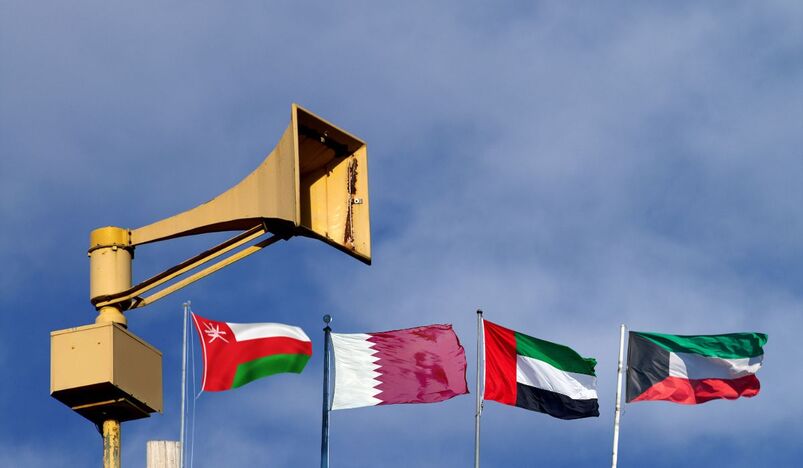
Air raid sirens sounded across Bahrain for the third time on Sunday, part of a wave of security alerts that swept multiple Gulf states as the conflict between the United States and Iran widened following a fresh round of US strikes on Iranian territory.
Bahrain: sirens sound three times in one day
Bahrain's Ministry of Interior said sirens were activated for the third time on Sunday, warning residents of incoming projectiles and urging them to remain calm and move to the nearest safe location. In a statement posted on X, the ministry reiterated instructions for citizens and residents to stay calm, head to safety, and follow updates only through official channels.
Qatar raises its security threat level
Qatar's Ministry of Interior raised the country's security threat level on Sunday morning, urging residents to stay indoors and away from glass facades and to avoid unnecessary movement. A follow-up message declaring the threat “eliminated” was issued at 5:55 a.m. local time, though the broader regional situation remained active throughout the day.
Kuwait and the UAE also respond
Kuwait's General Staff reported that its armed forces intercepted hostile aerial targets over the country's airspace, with explosion sounds heard in parts of the country attributed to air defense systems responding to the threats. Authorities urged residents to follow official safety instructions and avoid spreading unverified information.
In the UAE, the National Emergency, Crisis and Disasters Management Authority (NCEMA) said air defenses were actively engaging a missile threat and urged residents to remain in safe locations while monitoring official channels for updates.
What triggered this wave of alerts
The activations followed a third round of US strikes on Iran this week, in which US Central Command (CENTCOM) said it hit approximately 140 military targets using precision munitions launched from land- and sea-based fighter aircraft, drones, and naval vessels. CENTCOM said the strikes were launched in response to an Iranian attack on the M/V GFS Galaxy, a Cyprus-flagged container ship transiting the Strait of Hormuz, which suffered an onboard fire and significant damage.
In turn, Iran's Islamic Revolutionary Guard Corps claimed missile and drone strikes on US-linked military facilities across the Gulf, including sites in Kuwait, Bahrain, Jordan, and Oman. Iranian Parliament Speaker Mohammad Baqer Ghalibaf posted a defiant statement online, declaring that “the era of one-sided deals is over” and warning that Tehran would not back down under military or economic pressure.
The Islamic Revolutionary Guard Corps separately announced that the Strait of Hormuz would remain closed “until further notice,” after its forces fired warning shots at a vessel it accused of taking an unauthorized route through the waterway.
A conflict now over four months old
Sunday's escalation falls on the 25th day since the United States and Iran signed a Memorandum of Understanding intended to de-escalate hostilities, and the 134th day since the outbreak of the broader conflict, underscoring how far that agreement appears to have unraveled. Neighboring Oman was also struck on Sunday, with drone strikes hitting sites in its Musandam Governorate and a container ship damaged nearby, despite Oman's ongoing role as a mediator between Washington and Tehran.
What residents are being told to do
Across the affected Gulf states, official guidance has remained consistent: remain calm, move to the nearest safe location when sirens sound, stay away from windows and glass facades, and rely exclusively on official government channels for updates rather than unverified reports or social media rumors. With the situation continuing to develop rapidly, authorities have emphasized that further instructions will be issued through official channels as needed.



_19-42-2026_10-42.jpg)

_20-08-2026_05-08.jpg)
_27-51-2026_11-51.png)
_27-43-2026_12-43.png)



.jpg)
.jpg)



.jpg)


.jpg)
.png)
.jpg)













Leave a comment