


 By neha - July 17, 2026
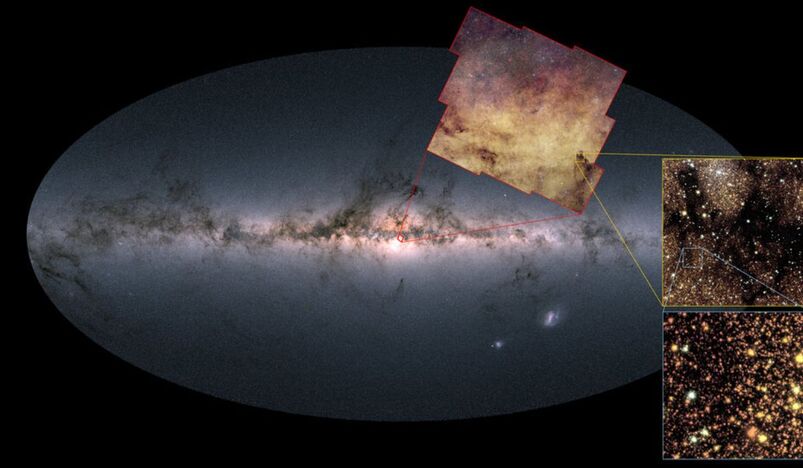
The European Space Agency just released the largest photo ever taken of our galaxy's center. Euclid, ESA's dark universe detective, captured it in visible light. The image packs in more than 60 million individual stars.
A Rare Look At The Galaxy's Crowded Core
Euclid usually points toward faraway galaxies billions of light years away. This time, astronomers asked it to turn toward something much closer to home. They wanted a look at the galactic bulge, the bright, dense center of the Milky Way.
This region is famously difficult to photograph in sharp detail. Stars pack together so tightly that most telescopes simply blur them together. Euclid's visible light camera can tell individual stars apart even in this chaos.
How Euclid Built This Massive Mosaic
On March 23, 2025, Euclid captured this entire image in about 26 hours. The final photo is a mosaic stitched from nine separate pointings. Each pointing covers a patch of sky larger than the full Moon.
Euclid's sharpness rivals the Hubble Space Telescope's wide field camera. Yet each Euclid pointing covers an area 270 times larger than Hubble can capture. That difference in scale is what makes this image so remarkable.
Beating Ground Telescopes On Speed
The Keck Observatory would need around 2000 hours to capture the same mosaic. Euclid did it in a single day. Its position in space also lets it catch fainter stars that ground telescopes often miss entirely.
This same mosaic covers the full region that the upcoming Roman space telescope will monitor. That overlap means scientists now have a valuable reference point for future missions.
What The Image Actually Shows
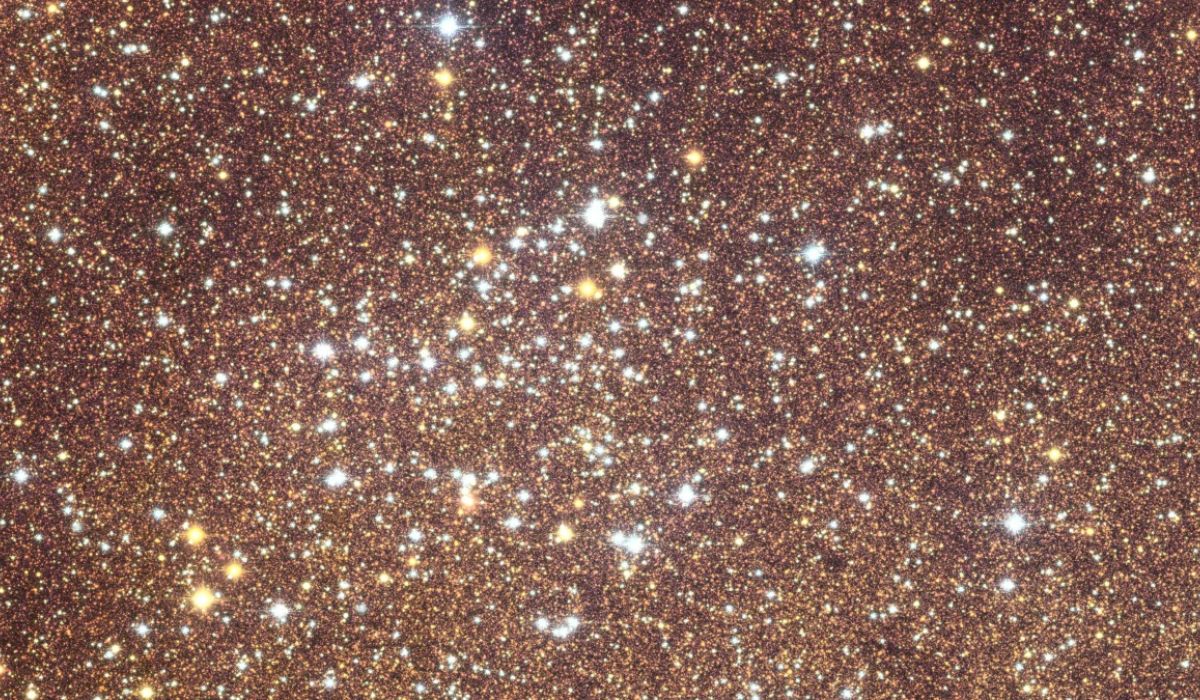
Beyond countless individual stars, the photo captures nebulas and dense star clusters. One section shows a striking molecular cloud drifting through the crowded field. Another highlights a tightly packed star cluster glowing against the darker background.
Because Euclid's original camera only shoots in black and white, the team added color afterward. Data from the ground based Canada France Hawai'i Telescope filled in that layer for public release.
Why This Image Matters Beyond Its Beauty
This is not just a stunning photo for casual viewing. Scientists plan to use it to search for planets around other stars. The same crowded star field that makes photography difficult also makes planet hunting possible.
Euclid was never designed specifically for this kind of close up galactic photography. Yet this one day detour proved just how flexible the mission really is.
_20-08-2026_05-08.jpg)
_27-51-2026_11-51.png)
_27-43-2026_12-43.png)



.jpg)
.jpg)




.jpg)


.jpg)
.png)
.jpg)










Leave a comment