


 By Hannah Grace - July 14, 2026
_14-18-2026_09-18.jpg)
Oil prices surged more than 4% on Monday as the United States and Iran traded attacks in an escalating standoff over control of the Strait of Hormuz, one of the world's most critical shipping waterways for global energy supplies.
Brent crude, the main international benchmark, rose more than 4% to top $79 a barrel in Asian trading, its highest level in over three weeks. WTI crude, the U.S. benchmark, climbed a similar amount to above $74 a barrel, snapping a two-day losing streak.
A Fragile Ceasefire Unravels
The renewed spike follows a weekend of intense fighting: the U.S. military carried out its fourth strike against Iran within a week on Sunday, in retaliation for an Iranian attack on a Cyprus-flagged container ship, while Iran launched strikes against five U.S. allies in the region. Tehran also declared the Strait of Hormuz closed to traffic "until further notice," a claim rejected by U.S. Central Command.
The latest escalation marks a reversal from earlier in the summer, when oil prices had returned to pre-conflict levels following an interim U.S.-Iran memorandum signed on June 17. Prices are now roughly 9% higher than before the U.S. and Israel launched their initial strikes on Iran in late February.
Analysts Weigh In
Mukesh Sahdev, founder and chief oil analyst at XAnalysts in Sydney, said he expects Brent to remain in the upper $70s through August and September given heightened geopolitical uncertainty, though he noted there could be occasional spikes and dips outside that range. He added that long-haul procurement forces refiners to make supply decisions weeks in advance, and those decisions have already reduced immediate reliance on Middle Eastern crude — a trend he expects the latest escalation to reinforce rather than reverse.
Fabien Yip, a market analyst at IG in Sydney, said prices are unlikely to approach the much higher levels seen earlier in the conflict despite the renewed turmoil. He noted that oil's return toward pre-war levels in June reflected markets pricing in a best-case outcome for the fragile U.S.-Iran arrangement, and that the latest re-escalation exposes how fragile that assumption was. Yip added that while the near-term risk premium should keep prices supported, a repeat of the earlier price spike appears unlikely, since demand remains slow to recover while stranded-tanker releases and OPEC+ output quota expansion continue to add barrels to an already oversupplied market.
Wider Market Impact
The renewed fighting also rattled equity markets across Asia on Monday. Japan's benchmark Nikkei 225 closed nearly 2% lower, while South Korea's Kospi plunged 9%. Natural gas prices in Europe also jumped on the Hormuz escalation, and reports indicated oil and LNG tankers were going dark again as shipping companies sought to avoid the conflict zone.
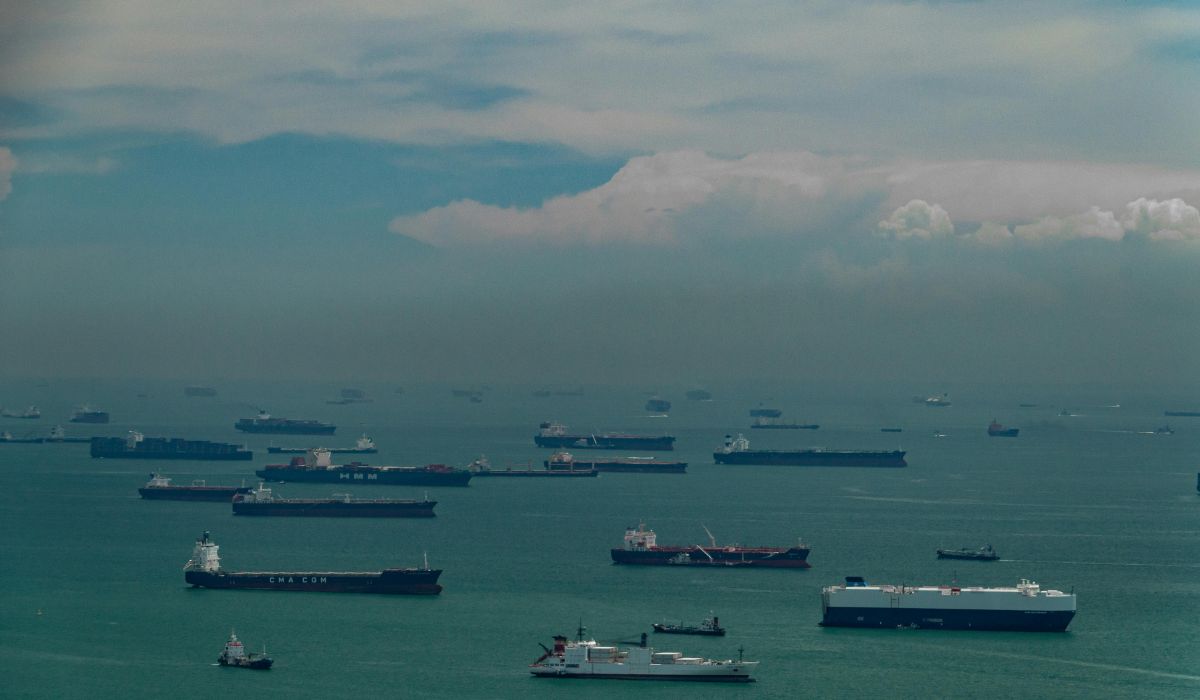
The Strait of Hormuz is a vital corridor for global energy supplies, with a significant share of the world's seaborne crude oil and liquefied natural gas passing through it daily. Any sustained disruption to shipping through the strait has historically been a major driver of oil-price volatility, given the lack of easy alternative routes for much of the region's exports.





_20-08-2026_05-08.jpg)
_27-51-2026_11-51.png)
_27-43-2026_12-43.png)



.jpg)
.jpg)




.jpg)


.jpg)
.png)
.jpg)













Leave a comment