


 By neha - July 08, 2026
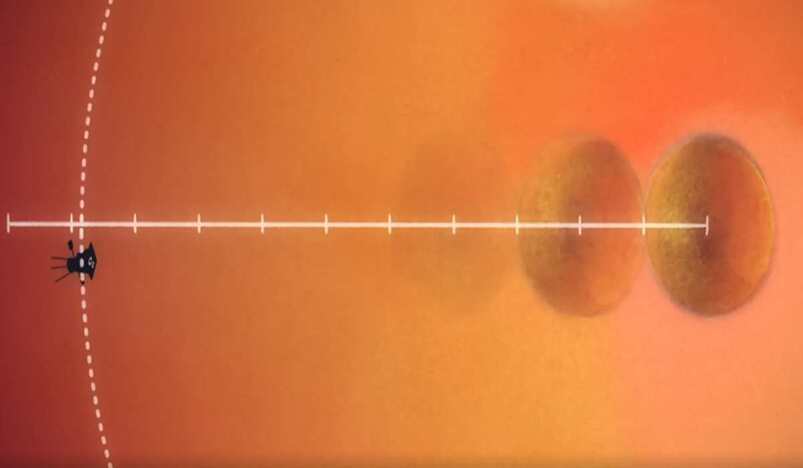
NASA built a spacecraft to do something scientists once called impossible. The Parker Solar Probe flew straight into the sun's outer atmosphere. It survived heat that would destroy almost anything else. Along the way, it became the fastest object humans have ever built.
A Mission That Sounded Impossible
Flying toward the sun sounds simple at first glance. The sun's gravity is strong enough to hold entire planets in orbit. Getting a spacecraft close to it is far harder than it seems. Earth already moves around the sun at roughly 67,000 miles per hour. Any spacecraft launched from Earth inherits that same sideways speed. To reach the sun, a probe must cancel out most of that motion. That task takes more energy than simply flying to Mars.
How Parker Solar Probe Solved The Problem
NASA launched Parker Solar Probe in 2018 to tackle this exact challenge. Instead of flying straight at the sun, it took a longer path. The spacecraft used repeated gravity assists from Venus. Each flyby shaved off some of its sideways speed. Over several years, these maneuvers pulled the probe into a tighter orbit. This let it approach the sun without simply flying past it.
Touching The Sun For The First Time
In April 2021, Parker Solar Probe reached a major milestone. It flew into the sun's corona, the star's extended outer atmosphere. The probe spent five hours inside this extreme environment. This marked the first time any spacecraft entered the corona directly. Scientists called it humanity's first real visit to a star. The probe measured conditions that researchers could previously only estimate.
Breaking Its Own Speed Record
Parker Solar Probe did not stop after that first encounter. On Christmas Eve, it made its closest approach yet. The spacecraft came within 3.8 million miles of the sun's surface. That distance is about ten times closer than Mercury's orbit. During this flyby, the probe reached a top speed near 430,000 miles per hour. That speed makes it the fastest human-made object in history. At that pace, the probe could cross from Tokyo to Washington in under a minute.
Surviving Extreme Heat
None of this would matter without proper protection. Engineers built Parker Solar Probe with a specialized heat shield. The shield reflects sunlight and absorbs heat through a water-cooled system. This design keeps the spacecraft's interior close to room temperature. That protection holds even while flying through atmosphere reaching millions of degrees. Without it, the mission would have ended before it truly began.
What Scientists Learned
The mission has already reshaped how researchers understand the sun. Parker Solar Probe helped confirm long-standing theories about magnetic reconnection. This process drives many of the sun's most powerful explosions. The probe also found new details about coronal heating and solar wind formation. Researchers even discovered that the boundary marking the sun's atmosphere is wrinkled, not smooth. These findings help scientists predict solar storms that can disrupt power grids on Earth.
Why This Mission Matters
Parker Solar Probe is named after physicist Eugene Parker. He first predicted the existence of solar wind back in the 1950s. It remains the only NASA mission named after a living person at launch. Parker attended the rocket launch himself in 2018. He passed away in 2022, four years into the mission's journey. His theories helped guide a spacecraft that once seemed impossible to build.
Frequently Asked Questions
Q: What is NASA's Parker Solar Probe?
It is a spacecraft designed to fly directly through the sun's outer atmosphere.
Q: How close has Parker Solar Probe gotten to the sun?
It came within 3.8 million miles of the sun's surface during its closest flyby.
Q: How fast does Parker Solar Probe travel?
The probe reached speeds near 430,000 miles per hour, the fastest of any human-made object.
Q: How does the spacecraft survive the sun's heat?
A specialized heat shield reflects sunlight and uses water cooling to protect its interior.
Q: Why is it hard to send a spacecraft to the sun?
Earth's own orbital speed carries over to any spacecraft, so it must shed that sideways motion first.

_20-08-2026_05-08.jpg)
_27-51-2026_11-51.png)
_27-43-2026_12-43.png)



.jpg)
.jpg)




.jpg)


.jpg)
.png)
.jpg)













Leave a comment