


 By guest - August 09, 2026
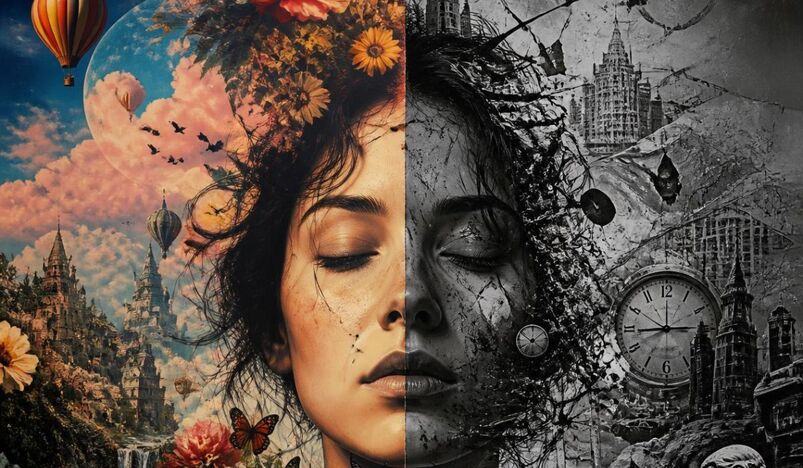
Have you ever woken from a vivid dream and wondered whether everything you saw was in full color or in shades of grey? The question has intrigued dream researchers for decades, and studies suggest the answer is more complicated than simply dividing people into color and black-and-white dreamers.
Many people today report dreaming in color, while a smaller proportion report black-and-white dreams. Others cannot remember whether color was present at all an important clue that dream recall may be as significant as the dream experience itself.
A study discussed by The Washington Post found that participants reported color in nearly half of their dreams, while black-and-white dreams accounted for about 10%. In roughly 40% of dream reports, participants could not remember whether color had appeared.
Does Age Make a Difference?
Research has found striking age differences in reported dream color. One study found that people older than 55, many of whom grew up before color television became widespread, reported color dreams less frequently than younger adults.
Separate research comparing surveys over time has also suggested that younger participants are considerably more likely to report color in their dreams. Researchers caution, however, that dream recall itself tends to become less detailed with age, which may partly explain the difference.
Could Television and Movies Influence Dreams?
One intriguing theory involves exposure to visual media. In the mid-20th century, when black-and-white television and cinema were common, surveys found surprisingly high numbers of people reporting monochrome dreams.
Later studies found that people who grew up with color television were more likely to report dreaming in color. Cross-cultural research has similarly found an association between longer exposure to color media and reports of colored dreams.
This does not necessarily mean television literally changes the colors generated by the sleeping brain. Researchers have proposed that media exposure may instead influence how people think about, interpret or remember their dreams after waking.
Memory May Be the Bigger Clue
Dream researcher Deirdre Barrett has suggested that color recall may partly be a matter of attention and memory. In waking life, people often remember an event without remembering the colors of ordinary objects within it. Something similar may happen with dreams.
A normal yellow banana, for example, might not leave a strong color memory, while an unusually colored object could be much easier to recall. Dream researcher Michael Schredl has likewise noted that colors carrying personal significance may be more memorable.
Some Dreams May Be Neither
Philosopher and consciousness researcher Eric Schwitzgebel has questioned whether every dream can meaningfully be classified as either colored or black and white. Some dream imagery may simply be visually vague or indeterminate, with details reconstructed or assumed after waking.
That possibility helps explain why people can remember a dream’s storyline, emotions and characters clearly while remaining uncertain about its visual colors.
What Does Dream Color Mean?
There is no good scientific evidence that dreaming in black and white is inherently abnormal or that dreaming vividly in color indicates a particular psychological condition. Older theories linking dream color with mental health problems have not held up.
Dreams are highly subjective and are influenced by waking experiences, memories, emotions and individual differences. A painter or designer, for example, may pay greater attention to color than someone for whom color has little everyday importance.
The Bottom Line
Most contemporary research suggests that many people experience or at least remember dreams in color, while black-and-white dreaming is also possible. Age, media exposure, attention and memory may all affect what people report.
So the next time you wake from a memorable dream, ask yourself one extra question before the details fade: What colors do you remember?
.jpg)
.jpg)
.jpg)


_20-08-2026_05-08.jpg)
_27-51-2026_11-51.png)
_27-43-2026_12-43.png)


.jpg)
.jpg)




.jpg)


.jpg)
.png)
.jpg)













Leave a comment