


 By Gladies Rajan - July 14, 2026
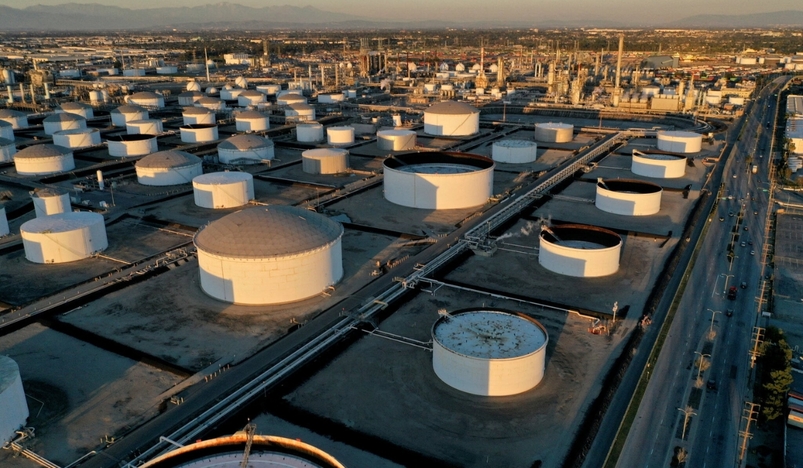
A handful of nations control the overwhelming majority of the world's proven oil reserves, with the Middle East alone accounting for roughly half of the global total. Here is a look at the countries holding the largest reserves, and what shapes their ability to bring that oil to market.
- Venezuela - 03 billion barrels
Venezuela holds the largest proven oil reserves in the world, mostly concentrated in the Orinoco Belt as extra-heavy crude that is more complex and costly to extract and refine than lighter grades. Despite its enormous reserve base, the country's production has long been constrained by political instability, aging infrastructure, and international sanctions. In January 2026, US forces captured President Nicolás Maduro, a development that has since raised questions about whether the country's vast reserves could be brought back into fuller production.
- Saudi Arabia - 267.2 billion bar
Saudi Arabia's reserves are largely light, sweet crude located close to the surface, making extraction significantly cheaper and more efficient than Venezuela's heavy crude. Home to giant fields like Ghawar and managed by state oil company Saudi Aramco, the kingdom remains the world's key swing producer, able to adjust output by millions of barrels per day to help stabilize global markets.
- Iran - 208.6 billion barrels
Iran's oil fields, concentrated near the Persian Gulf, are relatively easy to extract, giving the country substantial production potential. However, years of sanctions and geopolitical tensions, intensified by the ongoing conflict with the US and Israel, have limited Iran's ability to monetize its reserves on global markets fully.
- Canada - 163 billion barrels
The vast majority of Canada's reserves are located in Alberta's oil sands. Although classified as proven reserves because they are technically recoverable, oil sands extraction is notably more expensive and energy-intensive than pumping conventional crude. Canada remains a major exporter, particularly to the United States.
- Iraq -145 billion barrels
Oil exports form the backbone of Iraq's economy and government revenue. Despite holding one of the world's largest reserve bases, internal conflict, political instability, and underdeveloped infrastructure have historically limited the country's production potential; however, it remains a significant supplier to Asian and European buyers.
- Kuwait - 101.5 billion barrels
Kuwait is known for easily accessible oil fields and low production costs, helping the country maintain a long-standing role as a reliable global exporter and key OPEC member.
- United States - 70-84 billion barrels
Although the US ranks well behind the Middle Eastern giants in proven reserves, shale oil development and hydraulic fracturing technology have made it the world's largest oil producer for seven consecutive years, illustrating how technology and extraction efficiency can matter more than raw reserve size.
- Russia - 80 billion barrels
Russia's oil fields span vast regions from Western Siberia to the Arctic. As a key player in the OPEC+ alliance, Russia continues to exert significant influence on global energy markets despite ongoing sanctions and shifting export routes tied to geopolitical tensions.
- United Arab Emirates - 78-98 billion barrels
The UAE holds substantial reserves concentrated primarily in Abu Dhabi, supporting its role as one of OPEC's more economically diversified members even as it continues investing heavily in oil infrastructure.
- Libya - 48.4 billion barrels
Libya holds Africa's largest proven oil reserves, and its crude is generally high-quality and relatively easy to refine. However, prolonged political instability and internal conflict have repeatedly disrupted the country's production and export capacity.
Reserves Aren't the Whole Story
Proven reserves measure the amount of oil that can be recovered with reasonable certainty under current economic and technological conditions; however, reserve size alone doesn't determine a country's actual influence on daily global supply. The United States, for instance, ranks well outside the top of the reserves list yet has been the world's largest oil producer for years, powered by shale technology rather than reserve abundance. Meanwhile, Venezuela's massive reserve base has translated into comparatively modest production due to the technical difficulty of extracting its extra-heavy crude alongside political and economic headwinds. As of the most recent data, total global proven oil reserves stand at roughly 1.5 to 1.6 trillion barrels.
_07-52-2026_11-52.jpg)
_28-28-2026_04-28.jpg)
_28-23-2026_08-23.jpg)
_27-03-2026_08-03.jpg)
_27-47-2026_07-47.jpg)
_27-51-2026_11-51.png)
_27-43-2026_12-43.png)

_03-27-2026_08-27.jpg)
.jpg)


.jpg)
.jpg)




.jpg)


.jpg)
.png)
.jpg)












Leave a comment