


 By Guest - August 06, 2026
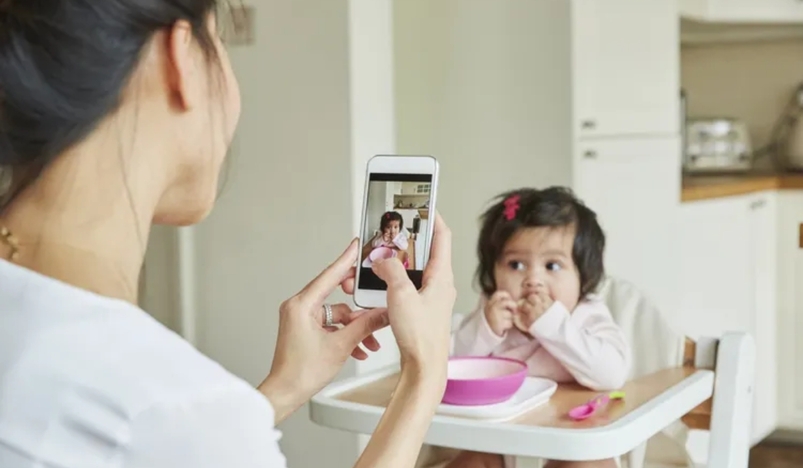
Parents who share photographs or videos of their children online could face serious legal consequences, after an Abu Dhabi court ordered two divorced parents to delete content featuring their daughters and warned that future breaches could lead to imprisonment or even the loss of joint custody.
In what lawyers describe as a landmark judgment, the Abu Dhabi Civil Family Court ruled that both parents must stop publishing their children’s photographs, videos and personal information online, remove existing content deemed harmful to the children’s best interests, and refrain from creating social media accounts in the children’s names without mutual consent.
The case
The judgment, issued on 9 June in a public hearing, arose from a dispute between a father and his former wife, a high-profile influencer, both resident in the UAE. The couple divorced in Germany in July 2025 and share joint custody of their children, who are around ten years old. The court found that both parents had failed to protect the children’s privacy and welfare, each having posted images of them online, and ordered each to refrain from any activity that could harm the girls, endanger their psychological wellbeing or prejudice their future prospects.
Notably, the court restrained the parent who had brought the case as well as the other side — underlining that the principle applies regardless of who is posting, and whether or not the content is monetised.
Grounded in child-rights law
Rather than deciding the matter on the consent arguments put forward by the father, the court based its ruling on the UAE’s Child Rights Law, known as the Wadeema Law, which protects children from exploitation and guarantees their right to privacy, together with the principle in Abu Dhabi’s civil family regulations that a child’s best interests are the parents’ primary consideration after divorce.
The judgment also warns that if either parent breaches the order, the other may return to court to seek further action, with possible penalties extending to imprisonment or the removal of joint custody.
Why lawyers say it matters
Byron James, partner and head of the UAE office at Expatriate Law, who represented the father, said the significance is that the court focused on the children rather than only on commercial posts. He noted that the same principle reaches the everyday family photo just as much as the paid one — the school sports-day picture and the sponsored advertisement alike. Commercial posts involving children, he added, raise further issues, including UAE licensing requirements where earnings are involved.
Other practitioners offered a note of caution on how novel the decision is. Diane Hamade, managing partner at Diane Hamade Attorneys at Law, suggested the case may not be entirely the first of its kind. Even so, lawyers broadly agree that parents across the UAE should take note of the direction of travel.
A wider shift
The ruling lands alongside a broader move by UAE authorities to treat children’s digital exposure as a welfare issue. A recent Cabinet resolution bars children under 15 from creating or operating personal social media accounts, giving platforms a transitional period of up to 12 months to implement age-verification and other safeguards and shifting more of the legal responsibility onto tech companies. Officials have urged parents not to act as a loophole by setting up accounts on children’s behalf.
Courts elsewhere have grappled with similar questions. A Dutch court in 2020 ordered a grandmother to remove photographs of her grandchildren posted without their parents’ consent, citing data-protection rules, while France passed an early child-influencer law in 2020 and later wrote children’s image rights into its Civil Code, allowing a judge to bar a parent from posting a child’s image without the other’s consent.
Note: Details are based on court reporting and commentary from legal practitioners involved in or familiar with the case. The parties have not been named to protect the children’s identities. This article is general information, not legal advice.

_20-08-2026_05-08.jpg)
_27-51-2026_11-51.png)
_27-43-2026_12-43.png)



.jpg)
.jpg)




.jpg)


.jpg)
.png)
.jpg)












Leave a comment