


 By Roysten Xavier - July 19, 2026
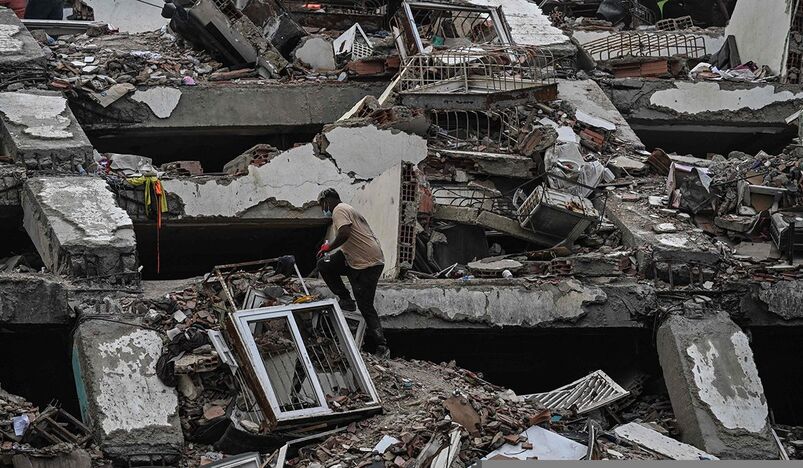
The death toll from the twin earthquakes that devastated north-central Venezuela in late June has risen to 5,119, officials said, as rescue teams pressed on through collapsed buildings and tens of thousands of people remained unaccounted for more than three weeks after the disaster.
The figure, the latest in a toll that has climbed steadily since the tremors struck, cements the catastrophe as the deadliest to hit the country in generations. Officials have cautioned that the number is likely to rise further as debris is cleared and the missing are accounted for.
A rare and violent double quake
The disaster began on 24 June, when a magnitude 7.2 earthquake was followed less than a minute later by a magnitude 7.5 mainshock, their epicenters in Veroes Municipality in the state of Yaracuy, west of the capital. It was the most powerful earthquake to strike Venezuela in more than a century — since the San Narciso earthquake of 1900. Hundreds of aftershocks have rattled the region in the weeks since, complicating rescue work.
Northern Venezuela sits along the complex boundary zone between the Caribbean and South American tectonic plates, a seismically active region that had not experienced a rupture of this scale in living memory.
Coastal state left in ruins
The damage was concentrated in Caracas and, most severely, in the coastal state of La Guaira, where officials say roughly 80 percent of buildings collapsed. Beyond the dead, more than 16,000 people were injured and tens of thousands were left homeless, with thousands sheltering in dozens of emergency sites across the capital and the coast. Aid agencies have warned that the humanitarian needs — shelter, clean water, medical care — will stretch well beyond the immediate rescue phase.
An international response
International search-and-rescue teams have joined the effort, including specialized units from the United States and a team from Qatar, working alongside Venezuelan crews and coordinated in part through the United Nations. Even weeks on, responders have reported occasional survivors pulled alive from the rubble — rare moments of hope against a mounting toll.
A disaster compounded
The earthquakes struck a country already weakened by years of economic and political crisis, straining an overburdened healthcare system and complicating relief. Communication was another obstacle in the critical early days: Venezuela maintains one of the world’s most restricted information environments, and rights monitors said numerous websites and social platforms were blocked as families searched for missing relatives. United Nations experts urged the authorities to fully restore access, calling reliable information vital to protecting lives.
What comes next
With large numbers still missing, the toll is expected to keep climbing; an early US Geological Survey assessment had flagged the possibility that fatalities could ultimately run far higher. For now, the focus remains split between recovering the dead, caring for the displaced, and beginning to reckon with the reconstruction of shattered communities along Venezuela’s central coast.
This is a developing story. Details are drawn from Venezuelan officials, the United Nations, the US Geological Survey, and reporting by CNN, Al Jazeera, Reuters, the Associated Press and others (late June–July 2026). Casualty and displacement figures are provisional and should be reconfirmed against the latest official updates before publication.

_20-08-2026_05-08.jpg)
_27-51-2026_11-51.png)
_27-43-2026_12-43.png)



.jpg)
.jpg)




.jpg)


.jpg)
.png)
.jpg)













Leave a comment