


 By Hannah Grace - July 14, 2026
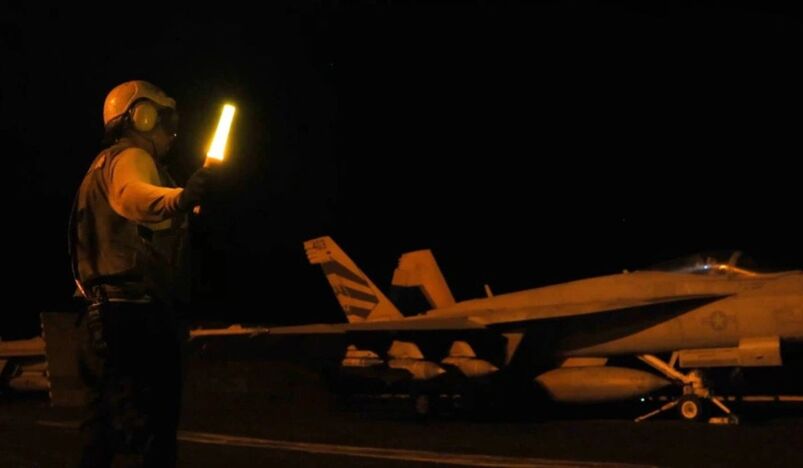
TAMPA, Fla. — U.S. Central Command said it completed its latest wave of strikes against Iranian military targets at 10:15 p.m. ET on Monday, July 13, marking the third consecutive night of American strikes since President Donald Trump declared the earlier ceasefire with Iran over.
During the five-hour mission, U.S. forces struck military targets across Iran, including sites at Bushehr, Chah Bahar, Jask, Konarak, Abu Musa, and Bandar Abbas, according to CENTCOM. The command said the operation was aimed at further degrading Iran's ability to attack commercial shipping in the region. U.S. forces employed precision munitions against Iranian coastal defense systems, missile and drone sites, and maritime capabilities.
A Third Straight Night of Strikes
CENTCOM said U.S. forces began launching Monday's strikes at 4:45 p.m. ET "at the Commander in Chief's direction," adding that the operation would "continue imposing a heavy cost on Iranian forces and degrade their ability to attack innocent civilians and commercial shipping in the Strait of Hormuz." More than 50,000 U.S. personnel have been involved in the broader campaign, according to CENTCOM figures.
Sunday's strikes, completed July 12, hit dozens of targets at multiple locations, with CENTCOM forces striking Iranian military air-defense systems, coastal radar sites, missile and drone capabilities, and small boats using U.S. fighter aircraft, naval vessels, one-way attack aerial drones, and, for the first time, one-way attack sea drones. A third round of strikes earlier in the week, completed July 11, was described by CENTCOM as holding Iranian forces accountable for attacking another commercial ship in the Strait of Hormuz.
Blockade to Resume Tuesday
CENTCOM said that, at the Commander in Chief's direction, U.S. forces will resume blockading maritime traffic entering and exiting Iranian ports starting July 14 at 4 p.m. ET, enforcing the blockade against vessels transiting to or from Iranian ports and coastal areas while continuing to support traffic flow for vessels not in violation. The move follows an earlier blockade that ran from April 13 to June 18, during which CENTCOM said it redirected more than 140 compliant vessels, disabled nine non-compliant ships, and allowed more than 50 commercial vessels supporting humanitarian aid to pass through.
"The Strait of Hormuz is a vital maritime corridor for global trade. Iran does not control it," CENTCOM said in an earlier statement. "U.S. forces are postured and prepared to ensure that freedom of navigation remains available to commercial shipping despite Iran's continued unwarranted aggression, harassment, threats, and arbitrary declarations."
Iran Retaliates Against Gulf Neighbors
Iran has responded to the American strikes with attacks targeting Gulf countries, including the United Arab Emirates and Bahrain. Bahrain, home to the U.S. Navy's Fifth Fleet, sounded missile-alert sirens early Tuesday as Iran retaliated against American strikes, while Tehran also struck two Emirati oil tankers in the Strait of Hormuz, according to reports.
Iranian Foreign Ministry spokesman Esmaeil Baghaei said it was "far from responsible to blame Iran for defending its sovereignty while failing to hold the aggressors accountable" for what he characterized as violations of international law.
Shipping and Markets Feel the Strain
Traffic through the Strait of Hormuz has slowed sharply amid the renewed hostilities, with confirmed crossings declining by around 52% week-on-week over July 10 to 12, according to shipping data firm Kpler, as vessels shift to "more defensive routing patterns," including greater use of Iranian and unofficial routes while avoiding Omani waters and corridors authorized by the International Maritime Organization. War risk premiums for the strait are expected to rise sharply, according to Lloyd's List Intelligence, as shipowners and charterers pause decisions to transit the waterway.
The renewed strikes have effectively unraveled the ceasefire that followed an interim U.S.-Iran agreement signed last month, which had aimed to reopen the strait and pause hostilities for 60 days of negotiations.

_20-08-2026_05-08.jpg)
_27-51-2026_11-51.png)
_27-43-2026_12-43.png)



.jpg)
.jpg)



.jpg)


.jpg)
.png)
.jpg)













Leave a comment