


 By neha - July 10, 2026
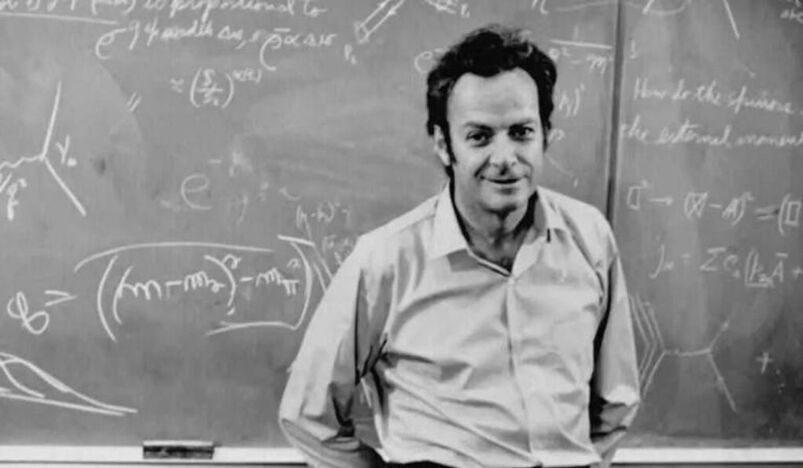
Richard Feynman never claimed to be a genius. He called himself an ordinary person who simply studied hard.
Yet Feynman won a Nobel Prize and helped shape modern physics. One daily mental habit explains much of that gap.
He Believed Anyone Could Learn Anything
Feynman insisted intelligence wasn't the secret to his success. He credited effort, curiosity, and a specific way of thinking instead.
He believed complex subjects like quantum mechanics were learnable by anyone. All it took, he argued, was enough sustained effort and the right method.
Omni Magazine famously named him "The Smartest Man in the World" in 1979. Feynman himself brushed off that label throughout his life.
The Daily Habit Behind His Thinking
Feynman kept what's now called a "Notebook of Things I Don't Know About." He used it to track gaps in his own understanding.
Rather than reviewing what he already knew, he mapped what confused him. He then worked daily to close those specific gaps through active practice.
This habit meant starting from first principles every time. He rebuilt his understanding from scratch instead of relying on memorized facts.
How The Feynman Technique Actually Works
The method now known as the Feynman Technique breaks learning into four steps. Each step forces active engagement instead of passive reading.
First, choose a concept and write it at the top of a blank page. Then try explaining it in the simplest language possible.
Next, identify the exact spots where your explanation breaks down or feels shaky. Those gaps show precisely what you still don't understand.
Return to source material only to fix those specific gaps. Avoid re-reading everything from the start.
Finally, simplify your explanation further and add an analogy if one fits. A working analogy signals genuine, structural understanding of the concept.
Why This Method Actually Works
Reading something creates a false sense of familiarity in your brain. That feeling often gets mistaken for real understanding.
Explaining a concept from memory works differently. It forces active recall, which is far harder and more effective than passive review.
Cognitive scientists note people often overestimate how well they understand complex systems. The Feynman Technique exposes that gap immediately and directly.
Teaching someone else pushes this even further. If your explanation doesn't hold up, you've just found your next study target.
How To Build This Into A Daily Habit
Pick one concept each day and write out your current understanding first. Do this before consulting any notes or source material.
Read only to fill the specific gaps you've already identified. Avoid absorbing information you don't yet need.
Close your notes completely and explain the concept again from scratch. Repeat this process until your explanation flows without hesitation.
Review your written explanations periodically over time. This turns isolated study sessions into lasting, connected knowledge.
Why This Habit Still Matters Today
Feynman's approach treats not knowing something as useful information. That mindset removes the fear that usually blocks real learning.
His method works across any subject, not just physics. People now apply it to languages, coding, and everyday professional skills.
The habit rewards consistency over raw intelligence. That's likely why Feynman insisted, again and again, that anyone could learn this way.
Frequently Asked Questions
Q: What was Feynman's daily learning habit?
He kept a notebook tracking gaps in his understanding and worked daily to close them.
Q: What is the Feynman Technique?
It's a four-step method: choose a concept, explain it simply, find gaps, then simplify further.
Q: Why does explaining something help you learn it?
Explaining forces active recall, which is harder and more effective than passive reading.
Q: Do you need to be a genius to use this method?
No, Feynman designed it specifically to prove that anyone can learn complex subjects.
Q: Can this technique work outside of science subjects?
Yes, people now use it for languages, coding, and everyday professional skills.

_20-08-2026_05-08.jpg)
_27-51-2026_11-51.png)
_27-43-2026_12-43.png)



.jpg)
.jpg)




.jpg)


.jpg)
.png)
.jpg)













Leave a comment