


 By neha - June 26, 2026
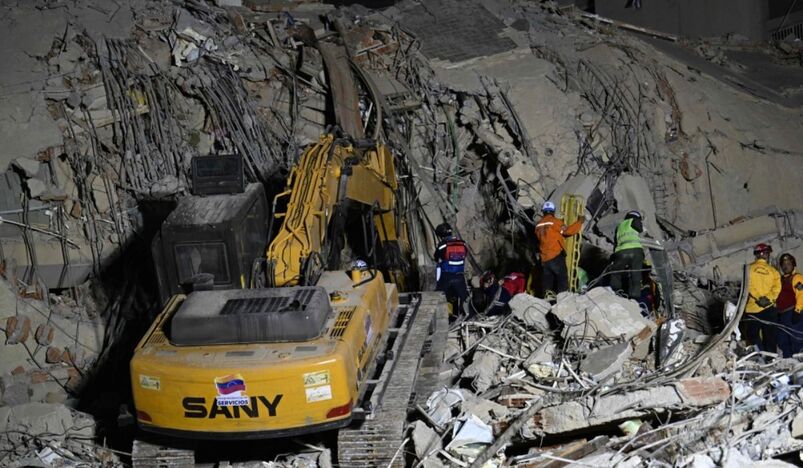
Venezuela is in crisis. Two powerful earthquakes struck the country on Wednesday evening June 24, 2026. At least 235 people are dead. More than 4,300 are injured. Over 40,000 people remain unaccounted for. Rescue teams are still digging through rubble as the hours tick by.
What Happened on June 24
The first earthquake hit at 6:04pm local time. It measured magnitude 7.2 and struck at a depth of roughly 22 kilometres. Just 39 seconds later, a magnitude 7.5 mainshock followed. Both earthquakes originated in the Veroes municipality in Yaracuy state, west of Caracas.
The 7.5 quake is the most powerful to strike Venezuela since 1900. That year, a magnitude 7.7 earthquake devastated the northeast of the country. Wednesday's back-to-back strikes are among the worst natural disasters in Venezuelan history.
The epicentres sat outside the capital but shaking tore through Caracas, La Guaira, Carabobo, Miranda, and Trujillo. Tremors reached neighbouring Colombia. They were felt in Brazil's Amazon region more than 1,700 kilometres from Caracas. People in Aruba, Bonaire, Curaçao, and parts of the Dominican Republic felt the ground shake.
The earthquakes were caused by strike-slip faulting along the boundary between the Caribbean Plate and the South American Plate. The shallow depths of both quakes, between 10 and 22 kilometres, amplified the destructive force of the shaking at the surface.
The Scale of Destruction
Venezuela declared a national state of emergency immediately after the quakes. The damage is severe and widespread.
La Guaira, the coastal state north of Caracas, suffered the worst destruction. The entire area has been declared a disaster zone. Aerial footage and satellite images show multiple apartment buildings completely collapsed. Roads are blocked by debris. Hotels, warehouses, and dozens of residential buildings are gone or severely damaged.
In Caracas, high-rise buildings and residential towers collapsed across the Altamira and El Paraiso neighbourhoods. The Simón Bolívar International Airport sustained major damage including a partial roof collapse. Authorities shut the airport down immediately. Classes have been suspended across the country.
National Assembly President Jorge Rodríguez confirmed that more than 200 people were trapped under debris on Thursday. The total number of damaged or collapsed structures exceeds 250 buildings.
The Jose Maria Vargas Hospital in La Guaira was overwhelmed quickly. Medical staff treated casualties outdoors. Venezuelan armed forces deployed field hospitals capable of supporting emergency surgeries. A military supply line opened near the city's stadium to channel aid to residents.
Rescue Efforts Are Running Against Time
Rescuers used heavy machinery, sledgehammers, and their bare hands on Friday. Workers called for absolute silence at collapse sites to listen for survivors beneath the debris.
At one site in La Guaira, Amparo del Giudice dug through a massive mound of concrete searching for her son. She told journalists the rubble was impossible to move with bare hands alone. Volunteers, many of them local residents, dug through wreckage in the first 24 hours with almost no heavy equipment available.
Elsewhere, a young girl died while crying out for help. Onlookers listened helplessly as she called from under the debris for hours. Local resident Dani Rizo, 48, said they needed military personnel to come and free her from the wreckage.
The USGS warned early in the crisis that the death toll could rise significantly. Buildings in the affected areas are predominantly made from unreinforced brick masonry and adobe mud bricks. Those construction types collapse with particular severity during strong earthquakes. The USGS estimated a 39 percent probability that deaths could reach between 1,000 and 10,000. These are statistical projections for emergency planning purposes, not confirmed figures.
More than 30 aftershocks have been recorded since the mainshock. The largest reached magnitude 4.5. Authorities warned residents to expect further aftershocks in the coming days.
Foreign Victims Confirmed
The dead include citizens from several nations. Two Spanish nationals, one Portuguese national, two Brazilians, one Italian-Venezuelan, and two Chinese nationals are among the confirmed dead. Spain's Ministry of Foreign Affairs reported on Friday that 80 Spanish nationals remain unaccounted for.
International Response Floods In
Nations across the world moved quickly to send help. The response grew rapidly through Thursday and into Friday.
The United States committed USD 150 million in financial aid. The State Department pledged USD 100 million to a United Nations humanitarian fund for Venezuela. It added
USD 50 million to aid organisations already working in the country. The US Defence Department provided aircraft for damage assessment, victim location, and emergency supply delivery. Secretary of State Marco Rubio announced the deployment of elite urban search and rescue teams from Fairfax County in Virginia and Los Angeles County.
A Disaster Assistance Response Team also deployed to coordinate emergency operations on the ground. A senior US military official arrived in Caracas on Friday to oversee American relief efforts directly. The US also deployed two warships and transport planes with helicopters.
A senior US military official landed in Venezuela's capital on Friday to oversee American relief efforts directly. The US also confirmed the deployment of two warships and transport planes carrying helicopters.
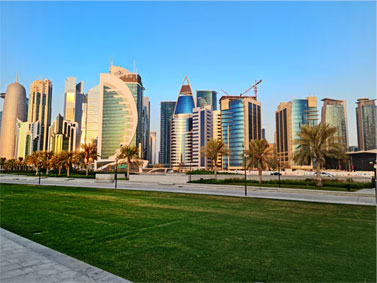
Qatar sent rescuers to Venezuela, confirmed by Venezuelan Acting President Delcy Rodríguez. Qatar also launched a dedicated air bridge to Venezuela to facilitate the movement of aid and personnel to the disaster zone.
Spain's Prime Minister Pedro Sánchez offered full support to the Venezuelan people. Spain's Military Emergencies Unit deployed to join rescue operations on the ground.
Mexico's President Claudia Sheinbaum announced the dispatch of rescue teams and health personnel from the country's Secretariat of National Defense.
Pope Leo sent an initial aid package worth 100,000 euros to support emergency response efforts. The European Union said it stands ready to mobilize assistance upon receiving a formal request from Venezuela.
China expressed willingness to provide assistance within its capabilities. Iran stated its readiness to support relief and rescue operations. Colombia, Argentina, Bolivia, Brazil, Chile, Ecuador, Panama, Uruguay, and several other nations pledged aid and solidarity.
Saudi Arabia expressed condolences and solidarity. The Philippines, Portugal, Serbia, South Korea, Slovakia, and Suriname all issued formal statements of support and offers of practical assistance.
Venezuela Was Already in Crisis Before the Earthquakes
The disaster hit a country already under severe political and economic strain. Venezuela has been in a prolonged financial and political crisis for years. The government's capacity to respond to a disaster of this scale is constrained by economic collapse and infrastructure decay.
The high concentration of poorly constructed buildings in the affected area amplified the death toll. The USGS specifically flagged that unreinforced masonry structures, which make up a large portion of Venezuela's residential building stock, collapse much more readily than reinforced concrete or steel-frame construction during high-magnitude earthquakes.
The 1812 Caracas earthquake, estimated at magnitude 7.5 or higher, killed an estimated 30,000 people. The 1967 Caracas earthquake caused several high-rise buildings to collapse and killed around 240 people in the capital's central districts. Wednesday's twin strikes are the latest chapter in Venezuela's long and painful history with seismic destruction.
What Comes Next
The rescue window is narrowing. Survival rates after building collapses drop sharply after 72 hours without food, water, and medical care. International teams are now on the ground but the scale of destruction across multiple municipalities is enormous.
Venezuelan authorities continue to assess the full extent of structural damage. A definitive death toll will take time to establish as search and rescue teams reach more sites.
More than 40,000 people remain officially unaccounted for, a figure that reflects the sheer scale of displacement and communication breakdown across the affected zones.
The world is watching and responding. The immediate challenge is simple and urgent. Find survivors, deliver care, and move fast enough to save lives that can still be saved.

_20-08-2026_05-08.jpg)
_27-51-2026_11-51.png)
_27-43-2026_12-43.png)



.jpg)
.jpg)




.jpg)


.jpg)
.png)
.jpg)









Leave a comment