


 By guest - August 16, 2026
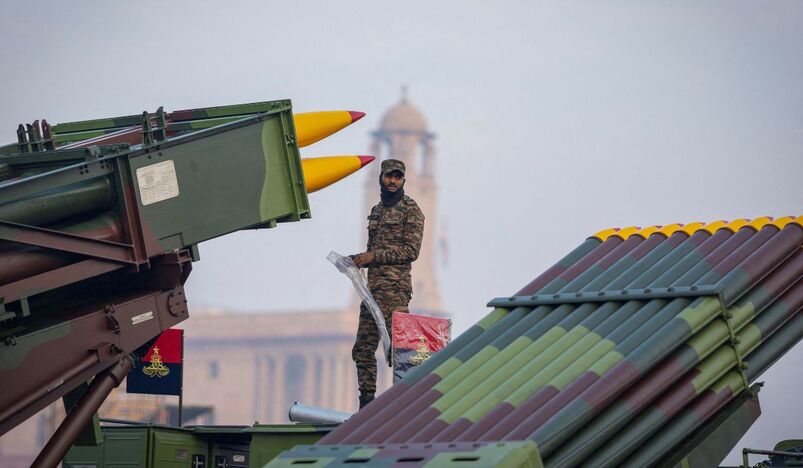
New Delhi, one of the world's largest arms importers, has made the modernisation of its defence forces a top priority, with repeated pushes to boost domestic production.
The drive is beginning to show in the numbers. Defence Minister Rajnath Singh announced in June 2026 that India's annual defence production reached a record Rs 1.78 lakh crore in the 2025-26 financial year, a 15.6 percent jump over the previous year's Rs 1.54 lakh crore and nearly a fourfold increase since 2013-14, when the figure stood at about Rs 43,746 crore.
Defence exports have climbed alongside production, hitting a record Rs 38,424 crore in the year ending March 2026, up almost 63 percent year-on-year. India now sells domestically manufactured defence equipment and components to around 100 countries, with the United States, France and Armenia among the leading buyers.
The push for self-reliance sits at the heart of the government's Atmanirbhar Bharat, or self-reliant India, initiative. Successive positive indigenisation lists drawn up by the Ministry of Defence have earmarked hundreds of items from artillery guns and radars to submarines and missiles to be procured only from domestic industry beyond set deadlines. The Union Budget presented on 1 February 2026 reserved roughly 75 percent of capital procurement for local firms and earmarked about USD 16.7 billion (Rs 1.39 lakh crore) for purchases from domestic industry, alongside increased funding for defence research and development.
Even so, India remains heavily reliant on foreign suppliers to fill capability gaps while indigenous programmes mature. The Stockholm International Peace Research Institute (SIPRI) still ranks India as the world's second-largest arms importer, though its share of global imports has edged down to about 8.3 percent in 2021-25 from 9.3 percent in the preceding five-year period a decline the institute links partly to India's growing ability to design and produce its own weapons.
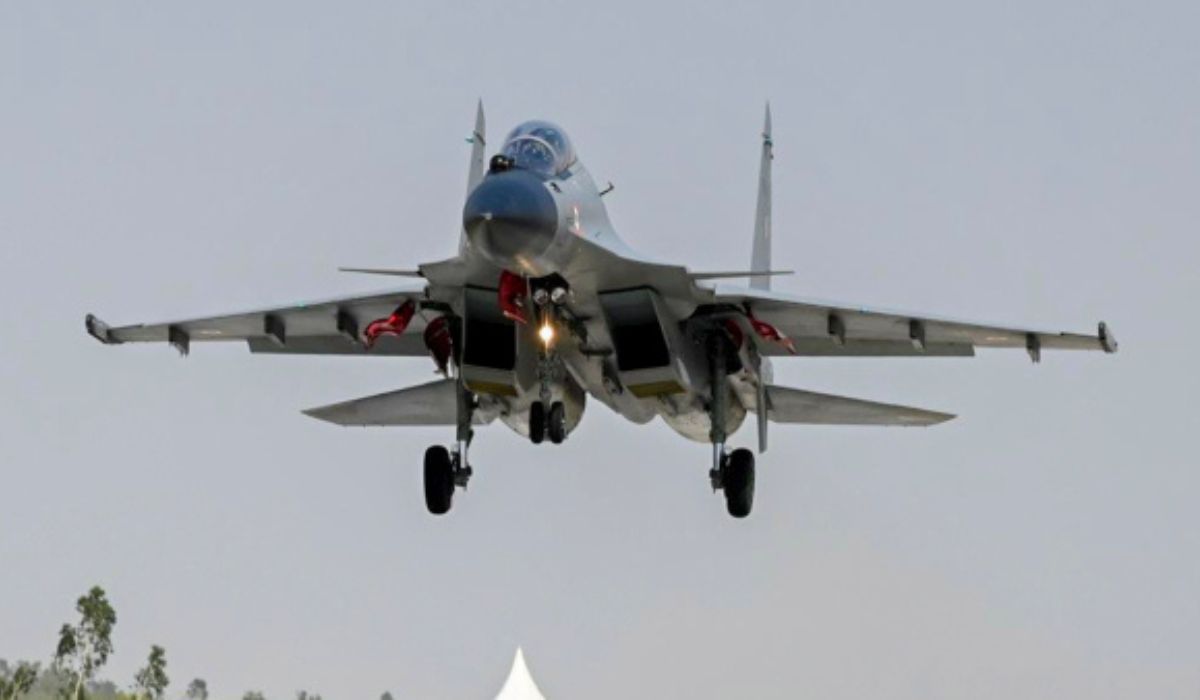
The scale of recent procurement underlines that imports are being reshaped rather than wound down. In a single financial year, India's Defence Acquisition Council approved 55 proposals worth around USD 71 billion, the highest on record, spanning transport aircraft, remotely piloted strike aircraft, gun systems, aerial surveillance platforms and additional Russian S-400 air defence systems, as well as more French Rafale fighters and Boeing P-8I maritime aircraft for the navy.
The supplier mix is also shifting. Russia, long the mainstay of Indian procurement, has seen its share fall from about 72 percent in 2010-14 to roughly 40 percent in 2021-25, as France, Israel and the United States take on a larger role in supplying advanced platforms. The private sector's share of domestic output, meanwhile, has risen to a record of around 24 percent.
Analysts note that the transformation is real but incomplete: domestic programmes still face delays, and import pipelines are likely to stay open for high-end systems even as New Delhi presses ahead with its long-term goal of building more of its arsenal at home.




_20-08-2026_05-08.jpg)
_27-51-2026_11-51.png)
_27-43-2026_12-43.png)



.jpg)
.jpg)



.jpg)


.jpg)
.png)
.jpg)








Leave a comment