


 By Guest - August 13, 2026

The International Energy Agency sharply lowered its outlook for global oil demand on Wednesday, warning that the prolonged closure of the Strait of Hormuz and stubbornly high fuel prices are eroding consumption faster than it had anticipated only a month ago.
In its August Oil Market Report, the agency said it now expects world oil demand to fall by 1.6 million barrels per day (b/d) in 2026, a steeper drop than the roughly 1 million b/d contraction it projected in July. The revision amounts to a downgrade of about 510,000 b/d and marks the latest in a series of cuts the IEA has made since war broke out in the Middle East earlier this year.
The agency attributed the weaker outlook to the ongoing shutdown of the strait and elevated pump prices, which it said continue to weigh on oil consumption. It cautioned that risks to the forecast remain substantial, even as it expects demand to pick up later in the year and return to growth in the fourth quarter.
Supply squeezed, inventories draining
On the supply side, the IEA said global output rose by 2.4 million b/d in July to 101.5 million b/d, but that level still ran 6.3 million b/d below where it stood a year earlier. Renewed hostilities and maritime disruptions in July and early August undermined a nascent recovery, the agency said, leading it to project that global supply will fall by 4.3 million b/d on average across 2026 before rebounding next year.
The report underscored the strain on global stockpiles. Observed oil inventories slid below 7.9 billion barrels in July, their lowest since April 2025. The agency warned that previously available inventory buffers are being depleted rapidly and that the urgency of reopening the strait has increased — even though it still expects the market to tip back into surplus toward the end of the year.
A chokepoint at the center of the crisis
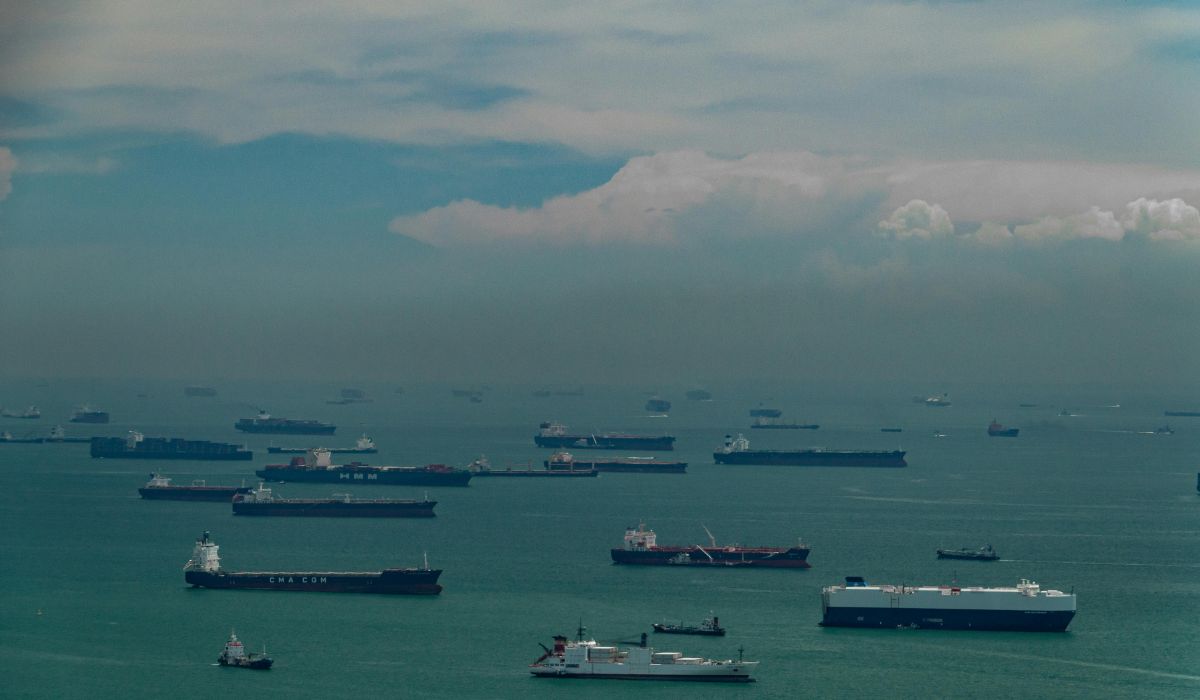
The Strait of Hormuz, through which roughly one-fifth of the world’s oil normally transits, has been effectively closed since a war that erupted in late February following U.S. and Israeli strikes on Iran. Tehran responded by shutting down most tanker and cargo traffic through the waterway, curtailing exports from major Gulf producers and sending crude prices sharply higher.
Diplomatic efforts to reopen the strait have repeatedly stalled. The IEA pointed to a series of what it called sudden diplomatic pivots, noting that despite a purported ceasefire and repeated claims that a deal was imminent, only a handful of ships are being allowed through. Iranian officials have said the United States must lift its naval blockade before the waterway can fully reopen, while Iran and Oman continue bilateral talks over shipping arrangements.
Prices stay elevated and volatile
Crude has remained well above pre-war levels and highly sensitive to headlines out of the region. Brent traded in the mid-to-high $80s a barrel this week, after swinging from as low as about $69 in early July — following a U.S.-Iran memorandum of understanding — to as high as roughly $105 on July 23, when tankers were attacked in the strait, according to the U.S. Energy Information Administration.
A Reuters poll of analysts published July 31 raised the average 2026 Brent forecast to about $85 a barrel, citing persistent disruption around Hormuz and heightened geopolitical risk. The EIA, for its part, does not expect Middle East oil production to return to near pre-conflict levels until early 2027, and projects Brent will average about $87 a barrel this year.
The economic fallout has spread beyond energy markets. The International Monetary Fund has trimmed its global growth forecast to 3 percent from 3.3 percent since the conflict began, as higher fuel costs and constrained refining capacity ripple through the world economy.
What to watch
For now, oil prices are likely to remain hostage to the diplomatic track. A credible agreement restoring unrestricted shipping through Hormuz could pull crude sharply lower and ease the pressure on demand; a further breakdown in talks, or renewed attacks on tankers and energy infrastructure, would deepen the supply losses the IEA is already flagging. With inventory buffers thinning, the agency made clear that the margin for further disruption is narrowing.
Sources: IEA August 2026 Oil Market Report; Reuters; U.S. Energy Information Administration Short-Term Energy Outlook (August 2026); International Monetary Fund. Figures reflect reporting as of August 13, 2026 and are subject to revision.




_20-08-2026_05-08.jpg)
_27-51-2026_11-51.png)
_27-43-2026_12-43.png)



.jpg)
.jpg)




.jpg)


.jpg)
.png)
.jpg)













Leave a comment