


 By Simran - September 10, 2026
_10-05-2026_12-05.jpg)
A major wave of Houthi missile and drone attacks on southern Saudi Arabia has wounded dozens of people and hit energy infrastructure, putting fresh pressure on Riyadh and presenting an early security test for its new defence pact with Türkiye and Pakistan.
Tensions between Saudi Arabia and Yemen’s Iran-aligned Houthi movement have escalated sharply after a coordinated series of attacks targeted Saudi cities, military facilities and energy infrastructure.
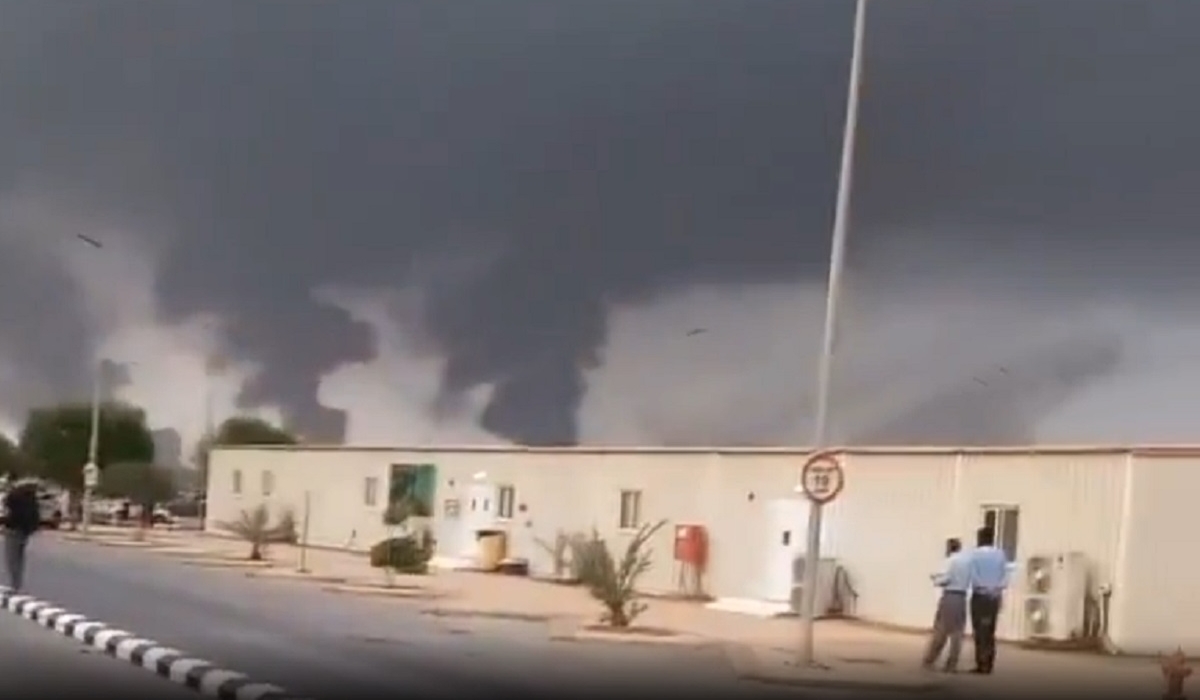
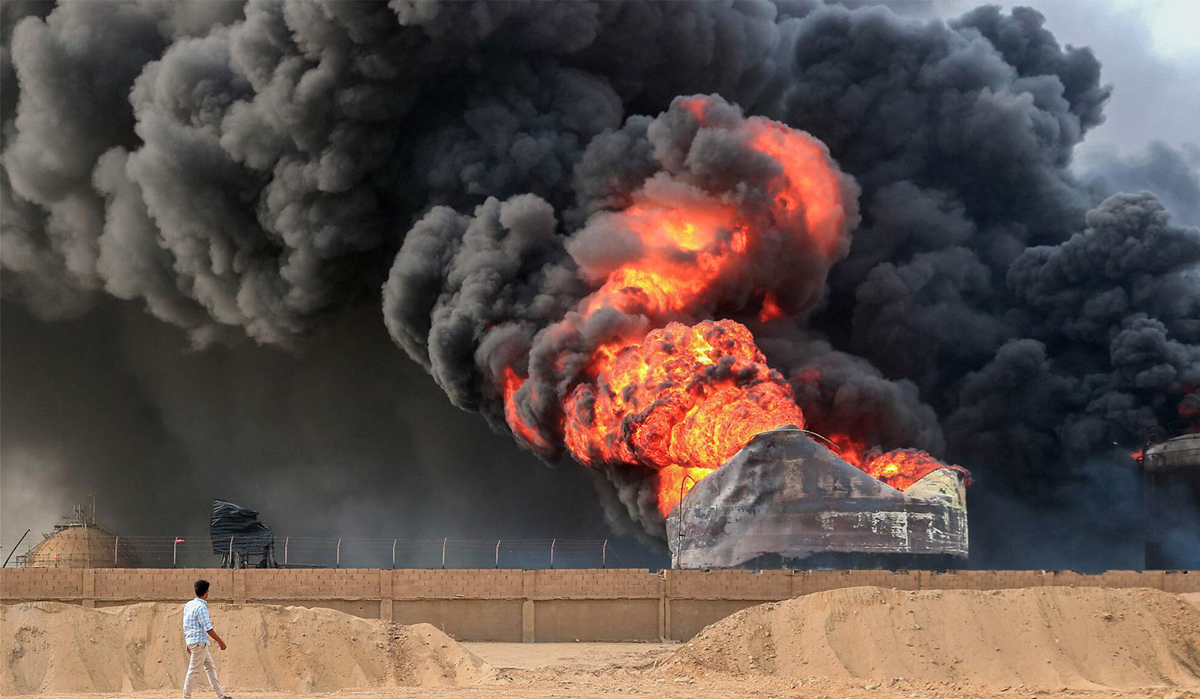
Saudi authorities said 73 people were wounded, including women and children, in attacks on Abha, Khamis Mushait, Jizan and Najran on September 8. Fires were reported at energy facilities, while some operations were temporarily disrupted.
The assault was among the most significant Houthi attacks on Saudi territory in years and comes as the wider Middle East is already dealing with escalating tensions involving Iran, the United States and regional shipping routes.
The renewed violence is also drawing attention to the recently created Mecca Defence Alliance, the three-way security arrangement linking Saudi Arabia, Türkiye and Pakistan.
What Did the Houthis Target?
According to Saudi authorities, the Houthi attacks struck several strategically important locations in the kingdom’s south.
Targets included:
• Energy installations in Abha
• Facilities in Najran
• Oil infrastructure around Jizan
• The Khamis Mushait area, home to a major Saudi air base
Saudi Arabia described the attacks as a dangerous escalation and said it would take measures necessary to defend its territory and national infrastructure.
Satellite imagery and reports from the region indicated fires around some energy installations, while the Saudi energy ministry said operations at certain facilities were disrupted temporarily.
By September 9, Saudi Civil Defense had lifted an emergency alert in Khamis Mushait, although security concerns remained elevated.
Houthis Say Attacks Were Retaliation
Houthi military spokesperson Yahya Saree said the operation was carried out in response to Saudi military action in Yemen.
The Houthis have accused the Saudi-led coalition of conducting airstrikes against Houthi-held areas, including operations in Al Jawf province.
Houthi-controlled media has reported casualties from recent strikes inside Yemen, although some of those claims have not been independently confirmed by Saudi authorities.
The renewed fighting threatens to undo years of relative calm following the 2022 United Nations-mediated truce, which significantly reduced cross-border attacks even after the formal ceasefire expired.
Why the Attacks Matter for Global Energy Markets
Saudi Arabia is one of the world’s largest crude-oil exporters, making attacks on its energy infrastructure significant far beyond the Gulf.
The latest Houthi strikes came as markets were already nervous about disruption around the Strait of Hormuz, where the United States and Iran have exchanged attacks on vessels.
Oil prices rose sharply following the Saudi attacks, with Brent crude moving toward — and later above — $100 a barrel as concerns mounted over the security of Middle Eastern energy supplies.
The danger for markets is that disruption could occur simultaneously along two major energy corridors:
The Strait of Hormuz, connecting Gulf oil exporters with international markets, and the Red Sea/Bab al-Mandeb route, where the Houthis have repeatedly targeted shipping.
That possibility raises the risk of higher fuel prices, transport costs and inflation internationally.
What Is the So-Called ‘Islamic NATO’?
Attention is now turning to the Mecca Joint Defence Agreement, signed by Saudi Arabia, Türkiye and Pakistan on August 7, 2026.
The agreement states that an armed attack on one member would be regarded as an attack on all three.
Because of that collective-defence commitment, some commentators have informally described the pact as an “Islamic NATO.”
However, that is not its official name, and the agreement should not be confused with NATO itself.
Türkiye’s Foreign Minister Hakan Fidan has said the mechanism is technically comparable in principle to NATO’s Article 5, but the actual response to an attack would depend on the circumstances and on what assistance the affected country requested.
The alliance combines three countries with very different military strengths:
• Saudi Arabia – a major Gulf economic and energy power
• Türkiye – a NATO member with one of the region’s largest armed forces and a significant defence industry
• Pakistan – a nuclear-armed state with longstanding military ties to Saudi Arabia
The agreement is intended to deepen defence coordination, military interoperability and deterrence.
Pakistan Signals Readiness to Support Saudi Arabia
The latest Houthi attacks have now provided one of the clearest early tests of that agreement.
Pakistan strongly condemned the attacks and said it stood in “complete solidarity” with Saudi Arabia.
Islamabad said it supported Saudi Arabia’s legitimate right to defend its territory, citizens and national assets in accordance with international law.
Reuters reported on September 9 that Pakistan had also conveyed a warning to Iran urging Tehran to rein in the Houthis.
Pakistani officials indicated that Islamabad was prepared to help defend Saudi territory if requested, while emphasising that any Pakistani role would be defensive rather than an open-ended intervention inside Yemen.
That distinction is important.
The defence pact does not necessarily mean Pakistani forces automatically enter every conflict involving Saudi Arabia.
Türkiye Condemns Houthi Attacks
Türkiye has also issued a strong response.
The Turkish Foreign Ministry condemned the Houthi strikes, saying they endangered civilians and escalated regional tensions.
Ankara reaffirmed its support for Saudi Arabia’s sovereignty and territorial integrity and called on the Houthis to halt their attacks.
Türkiye also warned that the attacks could undermine diplomatic attempts to reach a lasting political settlement in Yemen.
So far, Ankara’s publicly announced response has focused on diplomatic backing rather than a declaration of direct military involvement.
Is the Defence Pact Really Being Tested?
Politically, yes.
Militarily, the picture is more complicated.
The Mecca agreement contains a collective-defence principle, but many practical details surrounding how the three countries would respond jointly remain under development.
The alliance only recently established a permanent secretariat and began formal discussions about military coordination.
That means the current crisis will help answer several important questions:
• What level of attack is sufficient to trigger collective action?
• Must Saudi Arabia formally request military assistance?
• Would support involve troops, air defence, intelligence or logistics?
• Would Türkiye and Pakistan participate in operations inside Yemen?
• Could the alliance respond militarily without escalating confrontation with Iran?
For now, both Pakistan and Türkiye appear to be balancing solidarity with Saudi Arabia against the risk of being pulled into a much larger regional war.
Iran’s Role Remains Highly Sensitive
The Houthis are widely described as being aligned with and supported by Iran.
Tehran denies controlling the group directly.
Western and regional governments have repeatedly accused Iran of supplying the Houthis with weapons, technology and military assistance, while intercepted arms shipments have been cited as evidence of Iranian support.
Reuters reported that Saudi Arabia had asked Pakistan to convey a message urging Iran to restrain the group as the latest crisis developed.
Any direct confrontation involving the Mecca Defence Alliance and Iran would carry substantially greater risks than operations limited to Yemen.
Yemen Conflict Risks Returning to Full-Scale War
The latest escalation also raises fears that Yemen could return to the level of fighting seen earlier in its decade-long civil war.
Saudi Arabia intervened militarily in Yemen in 2015, leading a coalition supporting the internationally recognised government after the Houthis seized the capital Sanaa and large areas of northern Yemen.
The conflict caused enormous humanitarian suffering before violence declined following the 2022 truce.
Recent months, however, have seen renewed Houthi offensives, Saudi-backed counterattacks and escalating strikes.
More than 21,000 people have recently been displaced amid the renewed fighting, according to reporting citing humanitarian and health agencies.
A prolonged escalation could worsen Yemen’s already severe humanitarian crisis.
Saudi Arabia Faces a Difficult Choice
Riyadh has spent several years trying to reduce its direct involvement in Yemen while concentrating on domestic economic transformation and investment.
The renewed Houthi attacks put that strategy under pressure.
A limited response risks being interpreted as weakness.
A large-scale military campaign, however, could drag Saudi Arabia back into another costly war and potentially widen its confrontation with Iran.
Saudi officials have said the kingdom will defend itself while leaving open the possibility of diplomacy.
That balancing act is becoming increasingly difficult as attacks grow more severe.
A Wider Regional Security Test
The significance of the Houthi strikes now goes far beyond the Saudi-Yemen border.
They come at a time when:
• U.S.-Iran confrontation is escalating
• Shipping through Hormuz remains under pressure
• Oil prices have returned to around $100
• Red Sea trade routes remain vulnerable
• Saudi Arabia is building new regional defence partnerships
For the Mecca Defence Alliance, the crisis represents an early opportunity to demonstrate whether its collective-security commitment is primarily symbolic or capable of producing coordinated action.
Pakistan and Türkiye have already offered strong political backing to Riyadh.
Whether that develops into operational military cooperation will depend on how the conflict evolves — and whether Saudi Arabia decides such support is necessary.
The Bottom Line
The latest Houthi strikes mark a dangerous escalation in the confrontation between the group and Saudi Arabia.
With 73 people wounded, energy facilities targeted and fighting intensifying inside Yemen, the fragile calm that followed the 2022 truce is under growing pressure.
At the same time, the attacks have placed Saudi Arabia’s newly formed defence alliance with Türkiye and Pakistan under its first major real-world scrutiny.
The pact promises collective defence, but how far its members are prepared to go remains uncertain.
For now, Riyadh, Ankara and Islamabad appear to be trying to demonstrate unity and deterrence without allowing another Houthi attack to trigger a much wider regional war.
_14-56-2026_09-56.jpg)

_20-08-2026_05-08.jpg)
_27-51-2026_11-51.png)
_27-43-2026_12-43.png)



.jpg)
.jpg)




.jpg)


.jpg)
.png)
.jpg)













Leave a comment