


 By neha - June 04, 2026
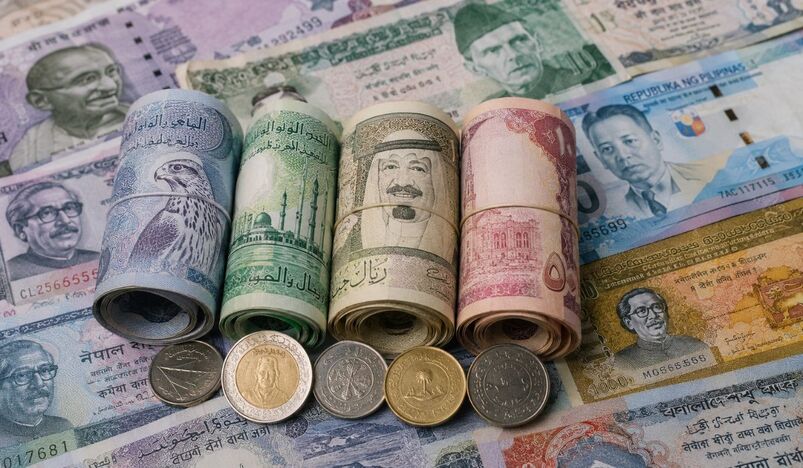
The latest foreign exchange market data shows Gulf currencies trading against several South Asian and Asian currencies, impacting millions of expatriates, travelers, students, businesses and families sending money across borders.
The Qatari Riyal (QAR), UAE Dirham (AED), Saudi Riyal (SAR) and Bahraini Dinar (BHD) remain among the most closely watched currencies in the region due to their importance for remittances and international transactions. All four Gulf currencies are pegged to the US Dollar, which keeps them stable and predictable — a key reason why workers and families across Asia rely on them for financial planning.
QAR Exchange Rates
1 QAR = ₹26.28 INR
1 QAR = Rs76.73 PKR
1 QAR = ৳33.69 BDT
1 QAR = Rs42.11 NPR
1 QAR = Rs85.06 LKR
1 QAR = ₱16.88 PHP
AED Exchange Rates
1 AED = ₹26.09 INR
1 AED = Rs76.05 PKR
1 AED = ৳33.40 BDT
1 AED = Rs41.75 NPR
1 AED = Rs84.30 LKR
1 AED = ₱16.73 PHP
SAR Exchange Rates
1 SAR = ₹25.55 INR
1 SAR = Rs74.60 PKR
1 SAR = ৳32.75 BDT
1 SAR = Rs40.95 NPR
1 SAR = Rs82.60 LKR
1 SAR = ₱16.43 PHP
BHD Exchange Rates
1 BHD = ₹254.80 INR
1 BHD = Rs723.00 PKR
1 BHD = ৳253.00 BDT
1 BHD = Rs397.00 NPR
1 BHD = Rs847.00 LKR
1 BHD = ₱159.00 PHP
Why These Rates Matter
Changes in Gulf currency exchange rates directly affect expatriate communities across India, Pakistan, Bangladesh, Nepal, Sri Lanka and the Philippines. Millions of workers employed across Qatar, the UAE, Saudi Arabia and Bahrain send a significant portion of their monthly earnings back home, making these exchange rates a matter of daily importance for families in all six countries.
A stronger Gulf currency generally increases the value of remittances sent home, while fluctuations can influence travel costs, tuition fees, imports, exports and international money transfers. The Pakistani Rupee, Bangladeshi Taka, Sri Lankan Rupee and Nepalese Rupee have all weakened considerably over recent years, which means Gulf workers from these countries are currently receiving higher home-currency value per riyal or dirham than at any point in the last decade.
The Bahraini Dinar stands out as the strongest Gulf currency by face value, with 1 BHD delivering the highest return in every home currency listed. However, Qatar, UAE and Saudi Arabia attract the largest expat workforces due to greater job availability and higher overall salary packages.
Market participants are closely monitoring central bank policies, oil prices, inflation trends, foreign investment flows and broader US Dollar movements, all of which can impact currency performance in the coming days.
Exchange rates offered by banks, money exchange houses, forex cards and remittance providers may vary from mid-market rates. Individuals are advised to compare live rates before making international transfers or currency exchanges.



_20-08-2026_05-08.jpg)
_27-51-2026_11-51.png)
_27-43-2026_12-43.png)


.jpg)
.jpg)




.jpg)


.jpg)
.png)
.jpg)











Leave a comment