


 By admin - April 28, 2026
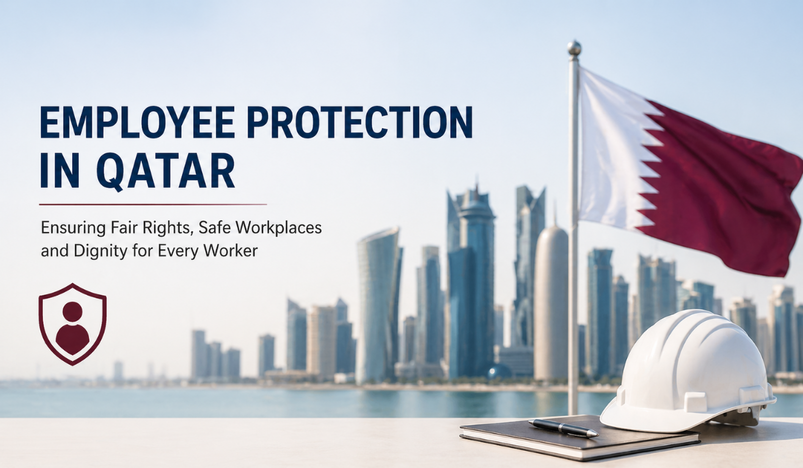
If you're planning to work in Qatar — or you're an employer building a team there — labor rights probably aren't the first thing on your mind. But they should be somewhere near the top of the list.
Qatar's workforce is one of the most internationally diverse in the world, with millions of people relocating there for work each year. That kind of scale comes with complexity, and over the past decade, the country has made notable efforts to modernize how employees are protected, treated, and supported on the job.
Here's a clear, honest breakdown of where things stand today.
The System Has Changed — Significantly
Not long ago, Qatar's labor framework was far more restrictive, particularly for migrant workers. Moving between jobs, or even leaving the country, required employer approval in ways that gave workers very little independence.
That has shifted. A series of reforms — driven partly by international pressure and partly by Qatar's own economic ambitions — have moved the system toward greater worker autonomy, legal transparency, and employer accountability. It's not a perfect system, but the direction of travel is meaningful.
Your Employment Contract Is Your Foundation
Every worker in Qatar is legally entitled to a written employment contract, and this isn't just paperwork. It's the document that protects you if something goes wrong.
A proper contract should clearly lay out your job title and responsibilities, your salary and how it will be paid, your working hours, your leave entitlements, and the duration of your employment. Crucially, contracts must be registered with the relevant government authorities — which adds a layer of accountability that benefits both sides.
If you're starting a new role and haven't been given a written contract, that's a red flag worth addressing before your first day.
Wages: A Floor That Applies to Everyone
Qatar introduced a non-discriminatory minimum wage that covers all workers, regardless of nationality or industry. This was a significant step, because wage protections that exclude certain groups tend to create a two-tier workforce — something Qatar explicitly moved away from.
Beyond the base wage, the law also accounts for basic living costs. If your employer doesn't provide accommodation or meals directly, there are allowance provisions built into the framework to cover those needs.
Employers are required to process wages through a monitored electronic payment system. This matters in practice because it creates a verifiable record — both for workers checking they've been paid correctly and for authorities tracking non-compliance.
Working Hours and Overtime: There Are Limits
The law sets clear boundaries on how many hours an employee can be required to work each week. During the summer months, when outdoor temperatures can be extreme, additional restrictions apply to protect workers from heat-related health risks.
Overtime exists and is legal — but it must be compensated at a rate above the standard hourly pay. Employers cannot simply expect extra hours as a given, and workers have the legal right to push back on demands that exceed what the law allows.
Health, Safety, and Where You Live
Employers carry a direct responsibility for workplace safety. That means providing appropriate protective equipment, training staff on risks, having procedures in place for medical emergencies, and — particularly given Qatar's climate — taking heat stress seriously as an occupational hazard.
For workers living in employer-provided accommodation, there are minimum standards that govern the quality of those living conditions. Inspections are conducted, and enforcement has been strengthened in recent years, though consistency across different sectors still varies.
Changing Jobs Is Now Your Right
One of the most practically significant reforms is the ability to change employers without needing your current employer's permission. Previously, this kind of restriction created situations where workers felt trapped — unable to leave a bad job without risking their legal status in the country.
Today, employees can move on by following standard notice procedures, just as workers do in most countries. This single change has done a lot to rebalance the power dynamic between employers and employees, and it pushes companies to compete on the quality of what they offer rather than relying on people having no other option.
What Happens When Things Go Wrong
Workplace disputes are inevitable in any country. What matters is whether there's a fair and accessible way to resolve them.
Qatar has established labor dispute committees specifically designed to handle complaints more quickly than a full court process. Workers can file grievances through formal channels, and support services exist to help navigate the process — particularly useful for those unfamiliar with local legal systems.
Knowing these channels exist, and knowing how to access them, is part of being an informed worker in Qatar.
Fair Treatment and Anti-Discrimination
Qatar's workforce spans dozens of nationalities, cultures, and backgrounds. The law requires that all employees be treated fairly, free from discrimination, harassment, or abuse — regardless of where they come from.
Enforcement is improving, but like most anti-discrimination frameworks, it relies heavily on awareness and willingness to report. Culture within individual workplaces plays a significant role in how well these protections function day to day.
The Honest Picture
The legal framework for employee protection in Qatar is genuinely stronger than it was a decade ago. The reforms are real and many of them are meaningful.
But there's a gap between what the law says and what some workers experience. Certain industries and employers have adapted well. Others haven't. That inconsistency is worth knowing about — whether you're considering a role there or managing a team.
For employers, meeting legal requirements is the baseline, not the goal. Companies that invest in fair treatment, clear communication, and genuine accountability tend to attract better talent and build more stable teams.
For employees, your awareness of your own rights is genuinely your strongest asset. Understanding what you're entitled to — before you sign anything, before you land — puts you in a far better position to recognize when something isn't right and know what to do about it.
Qatar is a place where the rules are changing in the right direction. But no set of rules runs by itself.

_20-08-2026_05-08.jpg)
_27-51-2026_11-51.png)
_27-43-2026_12-43.png)



.jpg)
.jpg)



.jpg)


.jpg)
.png)
.jpg)













Leave a comment