


 By guest - August 16, 2026
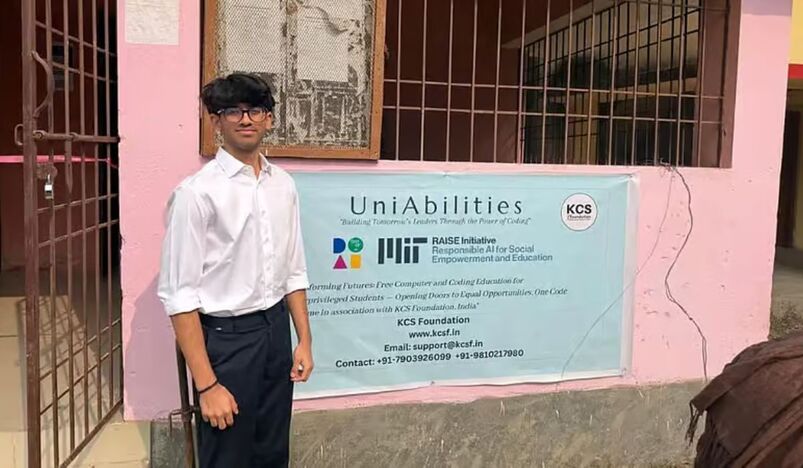
A 17-year-old student in Dubai is helping thousands of children in Bihar gain practical digital skills through a youth-led education initiative that has grown from a personal idea into a programme reaching around 8,750 students.
Dhruv Sharma, a Year 12 student at Dubai College, founded UniAbilities to expand access to computers and technology education for children in underserved Indian communities. His initiative is now aiming to reach more than 14,000 students during 2026.
A 2019 Visit Inspired the Initiative
Sharma traces the idea back to a visit to India in 2019, when he saw children around his family home missing school because of financial pressures and limited awareness about educational opportunities. The experience encouraged him to explore how the resources and opportunities available to him could be shared with other young people.
Computer Lab Established in Samastipur
UniAbilities now works with schools, non-governmental organisations and educators. One of its major projects is a computer laboratory in Samastipur equipped with 20 computers.
Students receive hands-on instruction in basic computer use, Microsoft Office, internet research, digital communication and accessing online government services skills intended to help participants become more confident in an increasingly digital world.
Local Trainers Help Extend the Programme
The initiative has also adopted a 'Train the Trainer' approach. Around 32 local trainers have been trained so far, helping the programme develop local capacity rather than relying only on sessions delivered from Dubai.
Sharma continues to conduct online weekend sessions alongside his studies and regularly visits Bihar to meet students and trainers, monitor progress and understand how lessons can be adapted for rural learners, including children using a computer for the first time.
From Computer Literacy to Coding and AI
The programme is expanding beyond basic digital literacy. Students and educators are being introduced to coding, Python and artificial intelligence as UniAbilities seeks to provide skills that could become increasingly relevant to future education and employment.
School Recognises Five Years of Contribution
New Era Public School in Munger recognised Sharma’s contribution to education and technology in an appreciation letter dated August 7, 2026. The school highlighted the potential long-term impact of the programme on students’ confidence, aspirations and future opportunities.
Family Legacy of Community Service
Sharma has also credited his grandfather, Ram Kumar Sharma, with encouraging a family tradition of serving communities, particularly in Bihar. That connection has helped shape the project’s continuing focus on the state.
Targeting More Than 14,000 Students
With approximately 8,750 children reached so far, UniAbilities is targeting more than 14,000 students in 2026. The broader objective is to narrow the digital learning gap while building a network of trained local educators capable of continuing the work independently.
An Independence Day Story of Giving Back
The initiative was highlighted around India’s Independence Day as an example of how young members of the Indian community abroad can contribute to educational development back home. From a single idea in Dubai, the project has evolved into a growing effort connecting classrooms in Bihar with practical digital and STEM learning.
Key Facts
• Founder: Dhruv Sharma, 17, a Year 12 student at Dubai College
• Initiative: UniAbilities
• Children reached: Around 8,750
• 2026 target: More than 14,000 students
• Computer lab: 20 computers in Samastipur, Bihar
• Local trainers trained: Approximately 32
• Skills covered: Computer literacy, MS Office, internet research, digital communication, coding, Python and AI
_23-06-2026_10-06.jpg)
_21-02-2026_12-02.jpg)
_17-38-2026_11-38.jpg)



_20-08-2026_05-08.jpg)
_27-51-2026_11-51.png)
_27-43-2026_12-43.png)



.jpg)
.jpg)




.jpg)


.jpg)
.png)
.jpg)













Leave a comment